 FOSTA
FOSTAP 925 - Experimental and computational evaluation of the fatigue strength of bolts with large dimensions in steel construction under consideration of surface layer influences
P 925 - Experimental and computational evaluation of the fatigue strength of bolts with large dimensions in steel construction under consideration of surface layer influences Large bolts of sizes M36 to M72 are preferably used in wind energy, but also in other areas of application in the form of HV fittings. The bolts used in these applications are exposed to high cyclic loads with variable amplitudes. The corrosion protection of the fasteners is often provided by hot-dip galvanising, which is an economical and long-lasting corrosion protection system. The influence of hot-dip galvanising on the fatigue strength of galvanised screws has not yet been comprehensively described scientifically. In addition, Wöhler curves, which are used for the design of bolts against fatigue, have only been validated to a limited extent for large bolt diameters. Based on the experimental investigations presented in this report, the influence of hot-dip galvanising on the fatigue strength of large HV bolts is systematically investigated. The aim of the research project is to develop a design concept for large-diameter bolts and to extend and verify established standards and regulations for application to large-diameter bolts. In addition to the typically used geometry of the HV bolt, the special boundary conditions include in particular the hot-dip galvanising and the associated surface layer influences, as well as the operating load due to variable amplitudes under high medium voltage. The following sub-goals were achieved as part of this research project: - Experimental analysis and, based on this, description of the influence of the galvanised surface layer, both in relation to the load distribution (thread overlap) and the damage mechanism under typical operating loads - Development and testing of a mathematical evaluation model based on the local stress and using the thin surface layer model - Validation of the model and experimental testing of the fatigue properties of large HV sets by means of extensive fatigue tests with constant and variable amplitudes - Processing of the results obtained for technical application on the basis of current standards and regulations (nominal stress concept) The research results have made an important contribution to the reliable assessment of the fatigue strength of large bolted joints, taking into account the influence of surface layers. This increases the reliability of calculations, which enables further utilisation of load-bearing reserves. For manufacturers of HV bolt assemblies and engineering firms involved in design and construction, the area of large bolts represents a high-growth sales area. The expansion of the experimental basis and the establishment of an experimentally validated design concept as well as the expansion and validation of established regulations will create design certainty and further strengthen SMEs in particular. Publication: 2016 Authors: Prof Oechsner, Prof Schaumann
available anytime
View details →€30.00
excl. VAT
 FOSTA
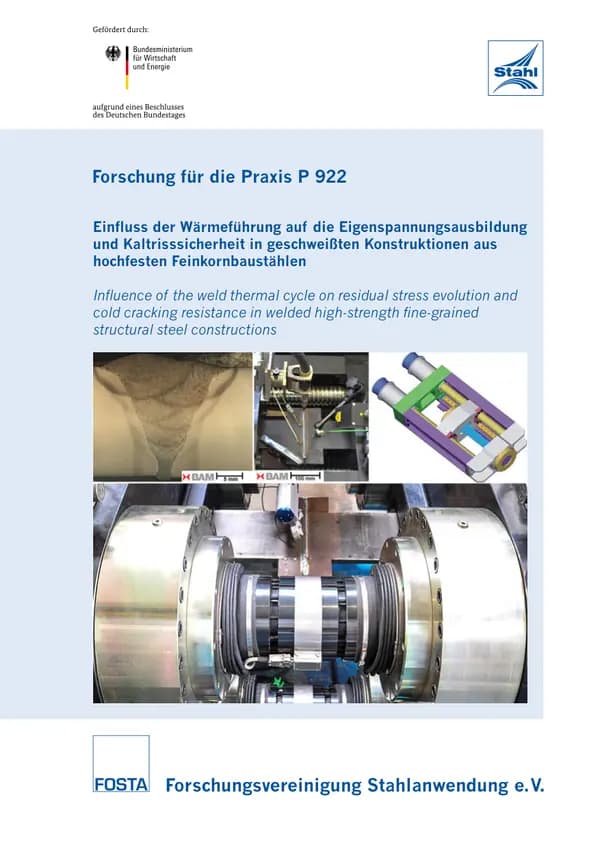
FOSTAP 922 - Influence of heat conduction on residual stress formation and cold cracking resistance in welded structures made of high-strength fine-grained structural steels
P 922 - Influence of heat conduction on residual stress formation and cold cracking resistance in welded structures made of high-strength fine-grained structural steels For economic, structural and aesthetic reasons, modern steel structures are becoming increasingly slimmer and lighter. High-strength fine-grain structural steels with yield strengths ≥ 690 MPa are increasingly being used for this purpose, enabling weight reductions of 30 % to 50 % and cost savings of 5 % to 15 % to be achieved. However, the potential of high-strength fine-grain structural steels cannot be utilised without further ado in compliance with current guidelines and regulations. The research project investigated the influence of heat conduction on residual stress formation and cold cracking, taking into account realistic stiffness conditions. On the basis of these findings, a contribution was made to improving the processing guidelines, which enables the processor to carry out safe welding processing with improved utilisation of the material properties. Above all, the load-bearing capacity and the safety of the welded joint determine the design of the structure and thus the sustainable and economical use of these steel grades. The relationship between the level of residual stresses generated and the heat conduction in real structures is currently only qualitatively manageable and leads to a rather conservative design of today's welded structures. The economic processing of high-strength steels is determined not only by the achievement of mechanical properties in the weld seam area that fulfil the requirements, but above all by the avoidance of cold cracks. However, the relevant recommendations in the applicable regulations are primarily based on findings from laboratory welding on small samples under free external shrinkage. However, the main causes for the formation of residual stresses such as inhomogeneous, localised heating and cooling of the areas close to the weld seam and, in particular, the structural shrinkage impediment due to surrounding assembly groups are not mapped in this way. The influence of heat conduction, in particular local pre-heating, on the inherent stress of a structure is currently largely unknown. The aim of the research project was to quantify the influence of heat conduction on the formation of residual stresses in welded structures and to develop statements on the influence and reduction of residual stresses and thus the overall residual stress of welded structures. For this purpose, by successively increasing the The relationship between heat conduction and the resulting residual stress under additional shrinkage restraint was clarified. Furthermore, the transferability of the small specimen results on which the regulations are based to real constructions was investigated. With the help of systematic small and large load welding tests on defined shrinkage-restrained specimens, the influence of high residual stresses as well as global residual stresses due to reaction stresses could be analysed. It was shown that a reduction in the local residual stresses and the internal stresses of welded constructions is possible through a lower heat input. is possible. Lowering the interpass temperature proved to be particularly favourable. This makes it possible to optimise existing heat conduction concepts for high-strength steels and thus avoid cold cracking. The IGF project 17267 N of the Forschungsvereinigung Stahlanwendung e.V., Düsseldorf, was funded via the AiF as part of the programme to promote joint industrial research (IGF) by the Federal Ministry for Economic Affairs and Energy on the basis of a decision by the German Bundestag. The project was carried out at the Federal Institute for Materials Research and Testing (BAM), Department 9.4 - Integrity of Welded Joints, Berlin carried out. Publication: 2015 Authors: T. Kannengießer, D. Schröpfer
available anytime
View details →€30.00
excl. VAT
 FOSTA
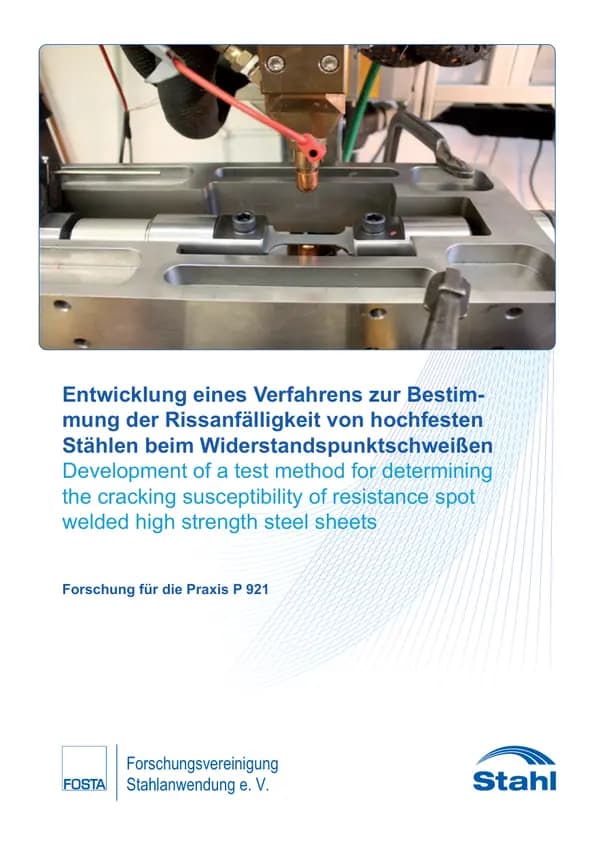
FOSTAP 921 - Development of a method for determining the susceptibility of high-strength steels to cracking during resistance spot welding
P 921 - Development of a method for determining the susceptibility of high-strength steels to cracking during resistance spot welding The ever-increasing demands for lower fuel consumption, reduced pollutant emissions and increased passive safety have presented the automotive industry with challenges that can only be met by the consistent use of modern steel materials. However, the complex microstructure and the special mechanical properties of these materials cause an increased tendency for cracks to form, particularly in resistance spot-welded joints. For small and medium-sized companies in particular, which are unable to carry out time-consuming and expensive preliminary investigations into the susceptibility of steels to cracking during resistance spot welding, knowledge of the susceptibility to cracking of a material combination they are processing is of considerable importance for maintaining competitiveness. An easy-to-use, material-independent method for determining the susceptibility to cracking during resistance spot welding can provide SMEs with the opportunity to quickly and cost-effectively assess the processing safety of material combinations to be processed. The aim of the research project is therefore to develop a simple and production-related method for determining the susceptibility of high-strength steels to cracking during resistance spot welding, based on the targeted, reproducible generation of cracks. Such a test method was developed, which is based on easy-to-perform experimental tests. Samples to be analysed are loaded with a tensile force during the welding process. A hydraulic device is used for this purpose, which applies a defined force to waisted flat tensile specimens. This results in a state of stress that favours the formation of cracks. This means that sufficient crack initiation rates can be achieved that allow a comparative assessment of the resulting crack lengths between the materials. The simple, mobile tensile device allows the existing system technology to be utilised. By standardising the resulting crack lengths to the yield strength of the material and the loaded cross-sectional area, a material ranking or a classification of the crack susceptibility of the high-strength material combinations tested can be created. Potentially higher strength steel materials developed in the future can also be analysed. Furthermore, the method developed can be used as a basis for obtaining basic data for investigating different types of crack formation during resistance spot welding. Publication: 2017 Authors: M. Rethmeier, H. Suwala, J. Frei
available anytime
View details →€20.00
excl. VAT
 FOSTA
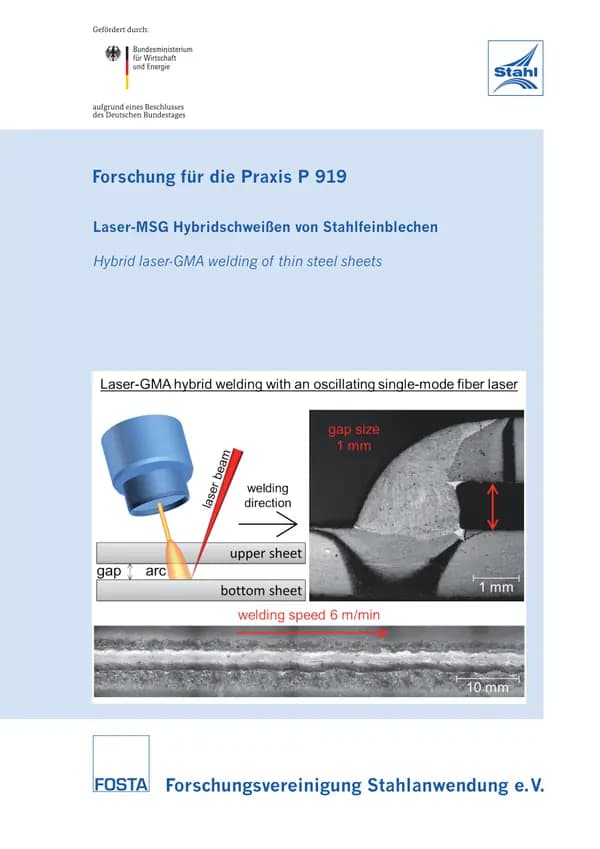
FOSTAP 919 - Laser-MSG hybrid welding of thin steel sheets
P 919 - Laser-MSG hybrid welding of thin steel sheets The state of the art in the welding of high-strength press-hardened steels makes it clear that the development of a low-energy welding process that is also tolerant of gap and edge misalignment is required. In particular, requirements such as high joining speeds and minimised thermal component stress under the boundary conditions that occur in production, such as tolerances in the joining area, must be taken into account. A major disadvantage of laser beam welding is the high demands placed on seam preparation. In contrast, arc processes such as GMA welding are used due to their ability to tolerate gaps and edge offsets, but with a higher thermal load on the component. The hybrid process used in this project allowed the advantages of the individual processes to be utilised synergistically by combining the processes. The hybrid welding process designed in this research project for the material 22MnB5 combines a laser welding process with a single-mode laser and a MAG welding process. The energy input from the laser beam could be precisely controlled thanks to the beam oscillation used. This achieved a high level of process reliability with a tolerance of gaps of up to 1 mm. The welding speed of 6 m/min reduces the thermal load on the component and guarantees a high level of economic efficiency for the process. The low-energy laser-MSG hybrid welding of ultra-high-strength sheet steel could also be applied to mixed joints of 22MnB5 and galvanised DP800. Furthermore, a temperature-controlled welding process was developed using integrated imaging temperature measurement and control. This control system will be used for further projects in order to significantly reduce the energy input in welding processes such as the laser-MSG hybrid process. The thermal influence on the material was analysed with regard to all welding parameters and seam properties. It should be emphasised here that joint strengths of up to 917 MPa were achieved for the quasi-static tensile load. The welding process described in this research project significantly improves the joining quality of welded joints on high-strength press-hardened 22MnB5 sheet steel compared to the previous state of the art. The advantage of the newly developed process, a combination of MIG and laser beam welding, simultaneously enables increased welding speeds and a high tolerance of joint gaps. These results will help steel manufacturers and steel processors in SMEs and large companies to use press-hardened steel safely and efficiently in production. The IGF project 17585 BG of the FOSTA-Forschungsvereinigung Stahlanwendung e. V., Düsseldorf, was funded by the Federal Ministry for Economic Affairs and Energy via the AiF as part of the programme for the promotion of joint industrial research (IGF) on the basis of a resolution of the German Bundestag. The project was carried out at the Bremer Institut für angewandte Strahltechnik GmbH (BIAS) and at the Brandenburg University of Applied Sciences, Mechanical Engineering Manufacturing/Production Technology, Joining Technology. Publication: 2015 Authors: H. Kügler, F. Möller, F. Vollertsen, S. Baum, S.-F. Goecke
available anytime
View details →€20.00
excl. VAT
 FOSTA
FOSTAP 914 - Experimental and numerical simulation of the influence of design and manufacturing tolerances on the crash behaviour of bonded joints
P 914 - Experimental and numerical simulation of the influence of design and manufacturing tolerances on the crash behaviour of bonded joints The demands placed on the automotive industry with regard to reducing fleet fuel consumption and the associated reduction in vehicle weights mean that developers are focussing on the consistent implementation of multi-material design in body-in-white construction. One key to realising these lightweight construction concepts lies in bonding technology. However, in order to fully utilise the enormous potential of this joining technology, manufacturing and process-related questions need to be answered. A significant part of this arises from the tolerances that occur in series production with regard to the geometric characteristics of the bonded seam. The influencing variables, such as the adhesive layer thickness and the geometry of the joint filling, can have a significant influence on the mechanical properties of the joint. Knowledge of the effects of the scattering that occurs during the manufacturing process, also taking into account the stress state and the load speed, is essential for the reliable design of components manufactured using adhesive bonding technology. Since the real product manufactured in series production shows deviations from the idealised variables of the simulation model, so that the measured mechanical component and structural behaviour can deviate significantly from that of the virtual model, these influencing variables must be taken into account. In particular, the question must be asked as to how large these deviations may be as a result of the series scatter without the overall behaviour of the body changing noticeably unfavourably in the event of a crash and then lying outside the permissible specification range. In order to answer this question, a simulation method for estimating the crash behaviour of bonded joints is qualified to the extent that it enables sufficiently accurate calculations of the crash behaviour of the overall structure with varying design and production-related tolerances. are possible. For this purpose, basic characteristic values for parameter identification of the material models used must first be determined. These are generated on the basis of basic tests on standardised samples. This applies in particular to shear stress-strain curves and normal stress-strain curves as a function of the adhesive layer thickness. Using these functions, the necessary parameters for a corresponding material model can be identified and the dependence of the individual material parameters on the adhesive layer thickness can be determined. The verification and validation of the material model is carried out using technological tests (single overlapped shear tensile specimen, peel tensile specimen) and component-like specimens (T-joint). These specimens were used in particular to analyse the influence of the joining component materials. A clear effect on the load-bearing behaviour of the joints could be determined for different joining part materials, which can be attributed in particular to the different joining part deformation and the resulting stress peaks in the adhesive layer. If glass fibre reinforced plastic (GRP) is used as a joining part material, a changed failure pattern often occurred, which can be described by partial delamination of the top layer in the GRP. As a consequence, this complex failure pattern, which also led to less reproducible test results, could not be predicted with the simulation methodology used. A very high prediction quality was achieved for the material combinations of steel materials. Publication: 2017 Authors: Prof. Dr.-Ing. G. Meschut, , Prof. Dr.-Ing. A. Matzenmiller
available anytime
View details →€30.00
excl. VAT
 FOSTA
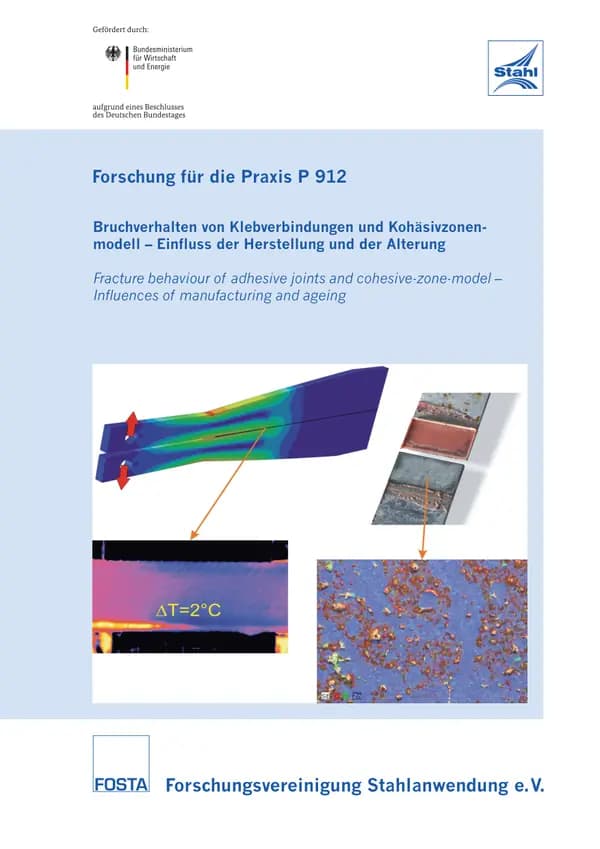
FOSTAP 912 - Fracture behaviour of bonded joints and cohesive zone model - influence of manufacture and ageing
P 912 - Fracture behaviour of bonded joints and cohesive zone model Influence of manufacture and ageing Partial report on the AiF/DFG cluster: Understanding and calculating the durability of bonded joints (BestKleb) This sub-project 4 of the BestKleb cluster dealt with four related topics. The first thematic block dealt with the finite element simulation of adhesive layers using cohesive zone models. Such models, which are characterised by high efficiency, were used with the parameters identified here in BestKleb sub-projects 7 and 8, which deal with applications in the construction industry. To further develop the cohesive zone models, a viscoelastic material model developed in SP 3 was transferred to a cohesive zone model, taking into account temperature, moisture and adhesive layer thickness. Methods were also developed to take into account the effect of transverse contraction restraint in the cohesive zone model, resulting in significant improvements in the prediction of joint stiffness. A fundamental parameter in the cohesive zone models is the critical energy release rate GIc during crack growth in the adhesive layer, the understanding of which was deepened in the second focus of the work. Two investigation methods were developed, which together make it possible for the first time to estimate the energy balance during crack growth. The first approach is based on a simulation of the TDCB test, in which both the crack propagation and the plastic deformation of the adhesive layer are taken into account. The second approach supplements the TDCB test by measuring the surface temperature of the adhesive layer using a thermal imaging camera and allows the amount of heat generated at the crack to be quantified. The critical energy release rate GIc was investigated in the third part of the project in relation to ageing, whereby various adhesives were analysed in close connection with BestKleb sub-projects 1 and 3. A method for calculating the effect of water diffusing into the adhesive layer was developed for a polyurethane adhesive. Finally, the fourth thematic block dealt with a process for improving ageing resistance. The increasing use of adhesive bonding technology requires a robust bonding process that can be used to achieve a load-bearing bond despite possible contamination that could reduce adhesion. Even minor surface adsorbates can lead to the failure of a bonded joint. With the help of adhesive application under power ultrasound, it is possible to remove contamination from the interface between the bonded part and the adhesive and thus ensure a contamination-tolerant process with reproducible strengths. As part of the BestKleb cluster, the conditions under which the selected adhesive systems are suitable for ultrasonic coupling were first discussed. To this end, the influence of ultrasonic coupling on the chemical (IRATR) and mechanical (DSC, DMA, tensile strength) properties of the adhesive system was analysed. This results in optimised process parameters for an adhesive system. These are characterised by a high cleaning performance and only a slight influence on the curing and pot life. The optimised process was used to investigate the ageing resistance of adhesives by means of destructive testing after climate exposure. ' The IGF project 17276 N of the Forschungsvereinigung Stahlanwendung e.V. - FOSTA, Düsseldorf, was funded by the Federal Ministry for Economic Affairs and Energy via the AiF as part of the programme for the promotion of joint industrial research (IGF) on the basis of a resolution of the German Bundestag. The research project was carried out at the Fraunhofer Institute for Manufacturing Technology and Applied Materials Research IFAM, Bremen and the Defence Research Institute for Materials and Operating Materials (WIWeB), Erding. Publication: December 2015 Authors: Dr.-Ing. O. Hesebeck, Dipl.-Phys. A. Sondag, Dipl.-Phys. U. Meyer, Dr M. Brede, M.Sc. B. Schneider, Dr.-Ing. Holtmannspötter, Prof. Dr J. von Czarnecki
available anytime
View details →€40.00
excl. VAT
 FOSTA
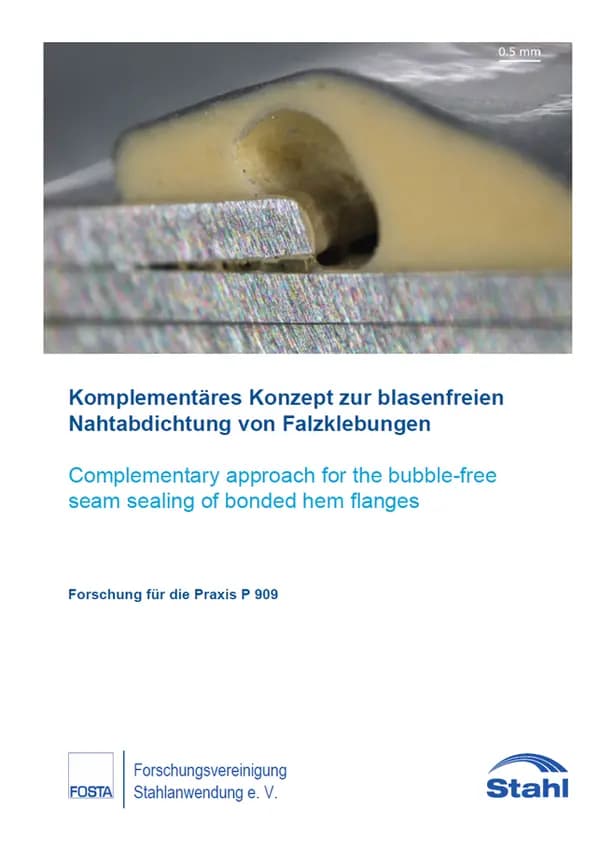
FOSTAP 909 - Complementary concept for bubble-free seam sealing of seam bonding
P 909 - Complementary concept for bubble-free seam sealing of seam bonding Interior and exterior parts of automotive add-on parts such as doors, flaps and bonnets are joined by seam bonding. This can result in air-filled cavities within the seam bond, which lead to bubble-shaped defects in the PVC seam seal during the subsequent manufacturing process. The seam seal is in the customer's field of vision, so the bubbles represent a visual quality problem. There is also a risk that defects will be destroyed by mechanical influences during the life of the vehicle. This would allow direct access of electrolytes into the seam and would not guarantee reliable corrosion protection for the seam bonding. Therefore, any defects in the seam seal that occur during the production process have to be laboriously reworked and repaired. In order to avoid the costs for the repair work, the increased expenses in quality assurance and a potential loss of image in the event of a serious corrosion problem, the mechanisms of the formation of defects and measures to reduce them as well as the development of a bubble-free seam seal are the subject of research. The aim of the research project was to develop the technological basis for the industrial production of bubble-free seam seals on seam bonding. The project is based on two complementary approaches: The reduction of cavities within the seam bonding on the process path (minimising the damage potential), as well as the substitution of the PVC plastisol, which is prone to defects, with a bubble-free seam sealing material on the material path (increasing the damage tolerance). Comparative tests of alternative NAD materials were carried out on the material path, which led to the qualification of an MS polymer as a potential PVC substitute. As part of the process path, the formation of cavities and the influence of process and individual part tolerances on the filling level were investigated. Based on these findings, detailed recommendations for optimising the seam bonding process and seam sealing were developed. The seam bonding process investigated is used both in large-scale production and in the production of small batches and individual parts. The integration of the recommendations for action developed in the project into the series processes will increase process reliability when joining steel components using seam bonding. The prevention of bubbles in the seam seal means a considerable economic benefit for the automotive industry and its suppliers, as the additional work involved in reworking and the risk of corrosion are prevented. Publication: January 2019 Authors: Prof. Dr rer. nat. B. Mayer, Dr H. Fricke, B.Sc. Ivo F. Neumann, Prof. Dr.-Ing. D. Landgrebe, Dipl.-Ing. F. Jesche, Dipl.-Ing. (FH) S. Menzel
available anytime
View details →€30.00
excl. VAT
 FOSTA
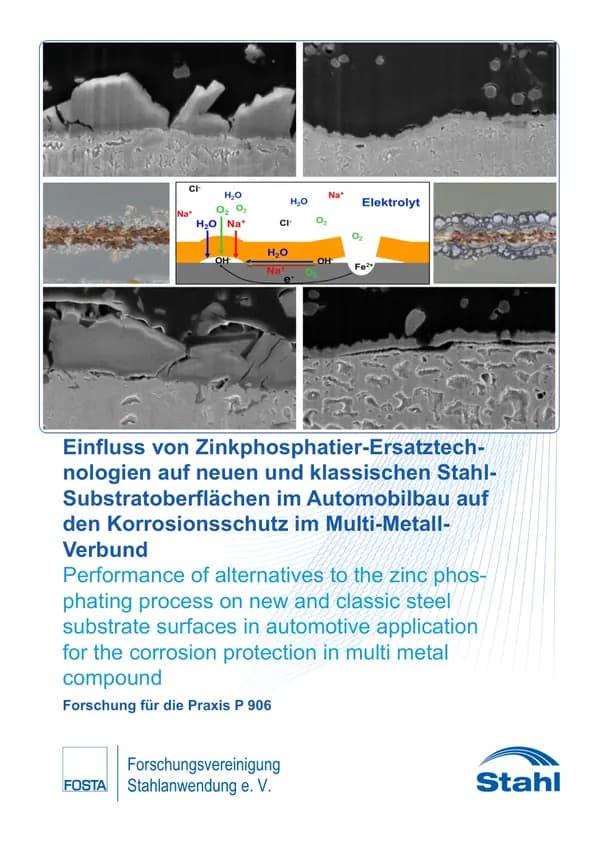
FOSTAP 906 - Influence of zinc phosphating replacement technologies on new and classic steel substrate surfaces in automotive engineering on corrosion protection in multi-metal composites
P 906 - Influence of zinc phosphating replacement technologies on new and classic steel substrate surfaces in automotive engineering on corrosion protection in multi-metal composites Multi-metal substrate materials are becoming increasingly important in automotive engineering. In addition to the conventional materials of steel and galvanised steel, aluminium and other new materials such as steel with zinc-magnesium coatings are increasingly being used. This new mix of materials poses a challenge to the established zinc phosphating process. The proven trication zinc phosphating process for the corrosion protection of steel and galvanised steel sometimes achieves inadequate corrosion protection with new materials. Another argument in favour of developing replacement technologies is the toxicity of the nickel salts used, which is why alternative thin-film pre-treatments (thin-film pre-treatment) are increasingly coming into focus. The corrosion protection effect of these new technologies has not yet been sufficiently investigated. Phenomenological studies and scientific methods have been used to investigate the relevant factors influencing corrosion protection. To this end, the corrosion processes on standard and new substrate materials (including steel, galvanised steel, steel with zinc-magnesium coatings, aluminium) were tested and evaluated in combination with new thin-film BCs in comparison with the zinc phosphating process. The substrates prepared with various pre-treatments were coated with a typical automotive cathodic dip coating. The systems were compared with each other in terms of their performance in order to gain an insight into the relevant corrosion processes. One aim of the investigations was to find out which parameters mainly influence the corrosion protection of the different systems. It has been shown that there is a very complex interaction between all three components substrate-VBH-KTL. The pre-treatment process is robust, which means that different substrates can be pretreated and cathodic dip coated in the multi-metal CVT process without any problems. The corrosion protection effect is highly dependent on the selected material combinations. Alkali and chloride ions chloride ions appear to be the critical corrosive stresses for thin-film VBHs. The higher alkali sensitivity is noticeable in the form of stronger cathodic delamination of the cathodic dip-paint coating during corrosion protection tests. Interface analyses show that penetrating media or corrosion products are deposited in the interfaces. The results show that some established laboratory corrosion tests appear to have been developed specifically for the benchmark (zinc phosphating), but cannot reproducibly reproduce the corrosion phenomena in other systems with new pre-treatments. In the "new" alternating test VDA 233-102 - which has shown good reproducibility in interlaboratory tests - cannot distinguish between different pre-treatments for substrates with intrinsic corrosion resistance such as aluminium or galvanised steel, even if the test duration is extended. can be distinguished. A possible starting point for reliably testing and evaluating the suitability of new substrate VBH systems could be electrochemical tests using polarisation and cyclic voltammetry. The investigations show that the systems with thin-film VBHs perform just as well as zinc phosphating under mild corrosive stress on galvanised, ZM and aluminium substrates. They are therefore suitable for applications with mild corrosive loads. In the case of high corrosive loads, some systems with thin-film BC show an equally good corrosion protection effect as corresponding systems with zinc phosphating. The results of the tested systems (substrate-VBH-KTL) can only be transferred to other systems to a limited extent. The user must therefore check each system for his requirements before use and decide whether the use of thin-film VBH is suitable in his case. Publication: 2016 Authors: C. Bauder, U. Christ, R. Nothhelfer-Richter
available anytime
View details →€30.00
excl. VAT
 FOSTA
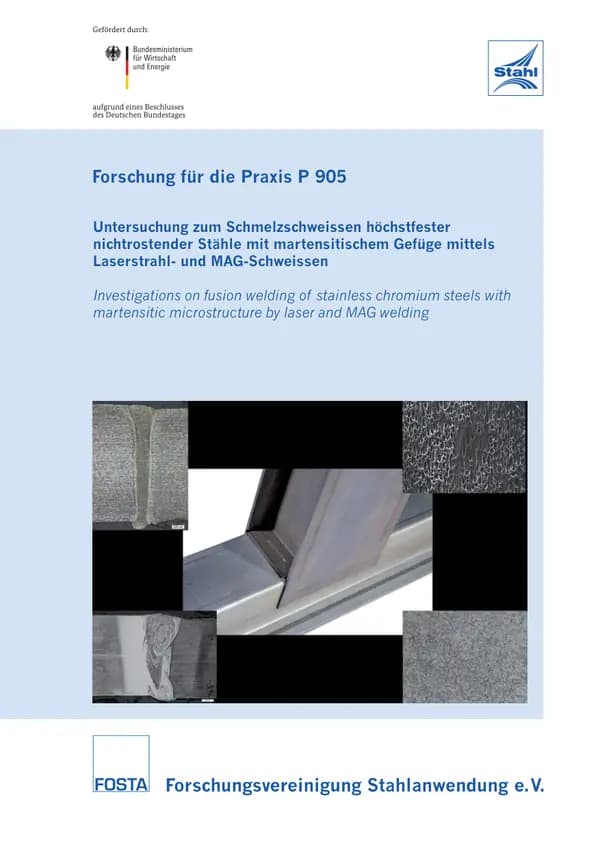
FOSTAP 905 - Investigation of fusion welding of ultra-high-strength stainless steels with martensitic microstructure by means of laser beam and MAG welding
P 905 - Investigation of fusion welding of ultra-high-strength stainless steels with martensitic microstructure by means of laser beam and MAG welding Anyone concerned with resource efficiency and lightweight construction in mobile structures cannot ignore ultra-high-strength steels. Recent considerations have led to the use of stainless steels with a martensitic microstructure. These steels have advantages due to their inherent corrosion resistance, excellent formability and hardenability. However, due to their carbon content of up to 0.46 per cent by mass, they have so far been classified as non-weldable. An investigation was therefore carried out with the aim of testing the weldability and determining the mechanical properties of welded joints. As part of process development, a concept for customised heat conduction was developed. The mechanical properties were determined in fatigue strength tests on butt joints for use in the production of tailored blanks and in the assembly of already hardened sheet metal. Tests according to the KS-2 concept as well as quasi-static and impact load tests on components similar to parts were carried out to determine the load-bearing capacity. Finally, corrosion tests were carried out with and without load in order to obtain information on the influence of the welded materials on environmental conditions. Short heat cycles are generally favourable for welding martensitic steels. In order to limit the scattering of hardness in the heat-affected zone, a welding heat treatment adapted to the individual materials was developed and applied. Preheating to the martensite starting temperature in combination with a tempering treatment below the solution temperature of the carbides leads to a relaxation of the tetragonal martensite and increases the toughness in the weld zone. Preheating also increases the width of the welding zone and makes the process less sensitive to mispositioning.martensitic steels can be welded using standard heat treatment. In the case of tailored blank production, heat treatment is not absolutely necessary, but welding heat treatment leads to a significant increase in fatigue strength. The effect is not as pronounced when welding hardened sheet metal. With optimised temperature control, the fatigue strength of the base materials in the rolled state is achieved in both cases. In dissimilar joints, the fatigue strength is limited by the weaker partner. The load-bearing capacity depends more on the seam geometry and the load direction than on the heat treatment. Compared to hardened manganese-boron steels, very high load-bearing capacities can be achieved. The manganese-boron steels exhibit higher breaking forces and a more ductile behaviour in the head tensile test. In dissimilar joints with conventional deep-drawing steels, a higher load-bearing capacity was again achieved with the chromium steels. In tests on components similar to parts, it was found that the fracture behaviour depends not only on the load speed but also on the load direction. In order to optimally utilise the material properties under crash conditions, precise knowledge of the load collective is essential. The corrosion properties were determined in the alternating climate test and in the sensitisation test according to ASTM. No influence of the corrosion load on strength and deformation behaviour could be determined in the climate change test. There was no attack on the material. The sensitisation behaviour is generally improved by press hardening. With increasing carbon content, the precipitation of carbides also increases. This in turn leads to increased susceptibility to intercrystalline corrosion. Welding heat treatment after press hardening can lead to a reduction in the ICC resistance of the weld seam. A significant influence of the welding heat treatment on the sensitisation in welded hardened sheets could not be found. All welding zones showed an attack in the heat-affected zone, which becomes stronger with increasing carbon content. The high-alloy steels with 12% chromium are used where their intrinsic corrosion resistance coupled with strengths of up to 1900 MPa are required, such as in commercial vehicles and railway vehicles. With the new developments, possibilities for the construction of welded structures with chromium steels with a martensitic microstructure will be demonstrated. The IGF project 17433 N of FOSTA - Forschungsvereinigung Stahlanwendung e.V., Düsseldorf, was funded via the AiF as part of the programme for the promotion of joint industrial research (IGF) by the Federal Ministry for Economic Affairs and Energy on the basis of a resolution of the German Bundestag. The project was carried out at the Fraunhofer Institute for Laser Technology, Aachen, the Laboratory for Materials and Joining Technology at the University of Paderborn and the Fraunhofer Institute for Structural Durability and System Reliability, Darmstadt. Publication: 2015 Authors: M. Dahmen, V. Janzen, S. Lindner, R. Wagner
available anytime
View details →€30.00
excl. VAT
 FOSTA
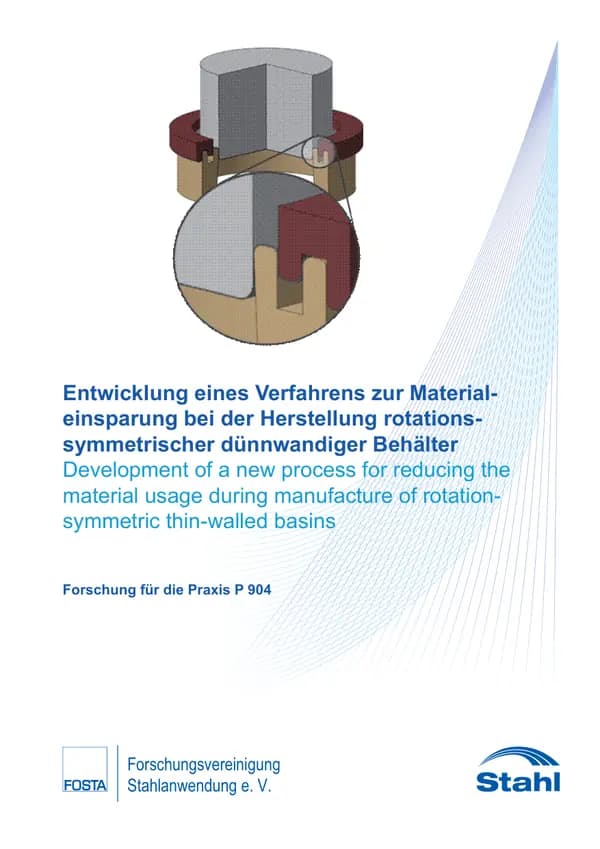
FOSTAP 904 - Development of a process for saving material in the manufacture of rotationally symmetrical thin-walled containers
P 904 - Development of a process for saving material in the manufacture of rotationally symmetrical thin-walled containers The motivation for the completed research project of the Forschungsvereinigung Stahlanwendung e.V. at the Institute of Forming Technology was the realisation of material savings in the production of rotationally symmetrical, thin-walled containers. This was realised by implementing short-cycle stretch forming technology (SCS technology) in the current manufacturing process. In the research project, the focus was on mass-produced products, which is why the research approach was based on the example of the 0.5 litre beverage can. The first manufacturing step of such a product is conventional cup forming, which is followed by corresponding manufacturing operations (stretching, trimming, etc.). With this procedure, no reshaping takes place in the area of the base of the cup, which is why the material remains almost in its original state (thickness and solidification). By implementing SCS technology in this production step, pre-stretching is realised before the deep-drawing process in order to thin out the material and simultaneously achieve quasi-homogeneous hardening. The corresponding hardening increases the strength of the base, which compensates for or even exceeds the reduction in strength due to the reduction in sheet thickness. The SCS technology was developed at the IFU and essentially consists of a two-part mould with a set of characteristic mould elements on the edge of the mould halves. When the tool is moved together, the outer mould elements of the tool interlock. The resulting bending and friction processes initialise a tensile stress on the inner area of the blank. This causes the material to flow in this area, resulting in stretching. In the deep-drawing stage, the cup is formed by pulling the blank out of the collapsed mould elements. In the research project, the SCS technology was implemented for the production of base bodies of the beverage can and a material saving of 8% was realised in the product base. This corresponds to an overall material saving of 3% for this product. The objective of the project was achieved. The significance of this research project lies in the further development of the manufacturing process for rotationally symmetrical consumer goods in the consumer, electronics and automotive industries through the use of SCS technology. By saving steel as a material, resources are conserved, the energy balance of the overall manufacturing process for rotationally symmetrical containers is further improved and the cost-effectiveness and competitiveness of steel containers compared to competing materials (plastics, Tetra-Pak) is significantly increased. Publication: 2016 Authors: M. Liewald, M. Schneider
available anytime
View details →€30.00
excl. VAT
 FOSTA
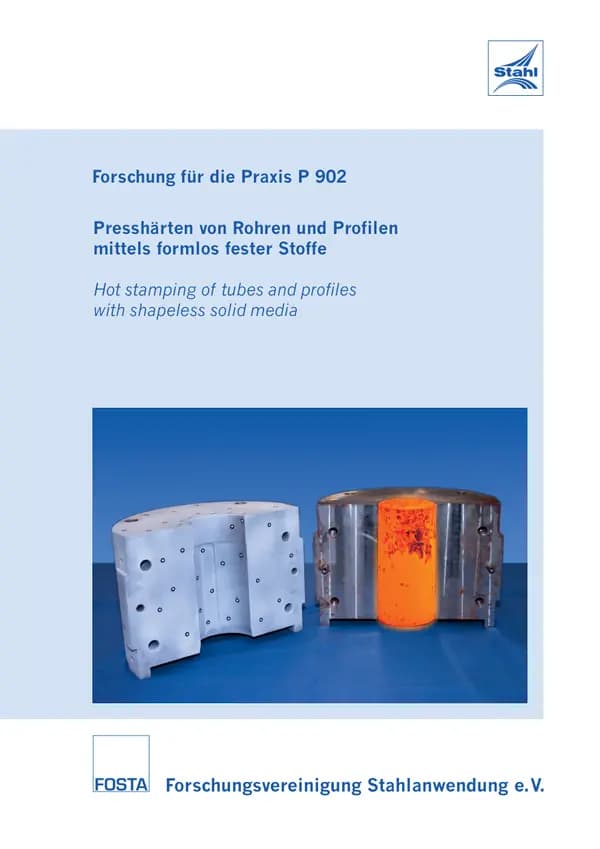
FOSTAP 902 - Press hardening of pipes and profiles using mouldless solid materials
P 902 - Press hardening of pipes and profiles using shapeless solid materials With increasing demands on safety in motor vehicles, but also with the aim of constantly reducing weight, press-hardened sheet metal is increasingly being used in motor vehicles. The sheets are usually produced using conventional deep-drawing processes. In order to extend the application to profiles and tubes, the tubes must be formed using hydroforming processes. Both gases and shapeless solid materials can be used for this purpose. The suitability of shapeless solid substances as an active medium for the press hardening of pipes and profiles has not yet been researched. The aim of this research project is therefore to demonstrate the feasibility of press hardening pipes and profiles with reusable shapeless solid materials. Using a geometrically simple test tool, this feasibility study was able to show that shapeless solid materials are basically suitable for realising the forming process, but also that the critical cooling rate of 27 K/s is not jeopardised. Temperature measurements during the cooling processes show that the shapeless solid materials hardly influence the cooling behaviour of the 22MnB5 tube, so that a sufficiently high temperature for forming is present after filling. This also ensures that pressure is applied to the cooling mould. The critical cooling rate can be achieved so that the microstructure also solidifies martensitically. Final hardness measurements across the wall thickness and analyses of the microstructure show that the material could be fully hardened during press hardening with the selected materials. Depending on the shapeless solid materials, different deformations were observed over the pipe height. This is due to the different behaviour of the media in transferring the force and compacting. The tests showed that this process is applicable. It was also shown that materials can be reused. A disadvantage that emerged from these tests was that the deformation is not homogeneous over the pipe height. This could be avoided in further investigations by using a mould that enables biaxial pressing, for example. The research project was carried out at the Institute for Forming Technology and Lightweight Construction at the Technical University of Dortmund with technical support and financial backing from the Forschungsvereinigung Stahlanwendung e. V., Düsseldorf. Publication: 2011 Authors: A. E. Tekkaya, T. Mennecart, J. Witulski, W. Homberg, T. Rostek
available anytime
View details →€20.00
excl. VAT
 FOSTA
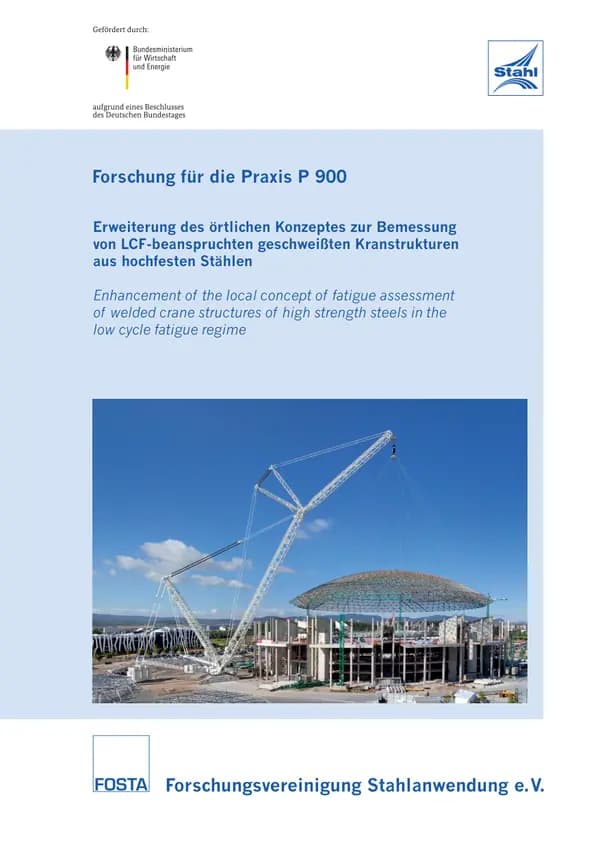
FOSTAP 900 - Extension of the local concept for the design of LCF-stressed welded crane structures made of high-strength steels
P 900 - Extension of the local concept for the design of LCF-stressed welded crane structures made of high-strength steels In crane construction, the dead weight has a significant influence on the payload and therefore also on the economic efficiency of the structure. By reducing the dead weight without compromising the load-bearing capacity, the load capacity and thus the payload can be increased accordingly. This demand for higher load-bearing capacity with lower weight and material savings is achieved by using modern high-strength and ultra-high-strength steels. This research report examines the question of whether the higher static strength of the fine-grained structural steels S960QL, S960M and S1100QL can also be utilised in the welded state under cyclic loading in the short-term strength range (LCF range). For this reason, the fatigue strength behaviour of the high-strength and ultra-high-strength steels in the welded condition without and with post-weld treatment in the LCF range was characterised within this research project and prepared for numerical design. The fatigue strength results under constant as well as under variable load amplitudes based on operational measurements with a stress ratio of Rs = 0.1 show that the high static strength can also be utilised under fatigue in the short-term strength. While the fatigue strength of welded butt welds under constant load amplitudes can be continued linearly up to a nominal stress amplitude of Dsn = 900 MPa, a bilinear curve occurs under variable load amplitudes. The advantage of high-strength fine-grain structural steels is also demonstrated by the fatigue strength results of welded transverse stiffeners. The Wöhler and Gaßner lines are also linear up to the area of the static material yield strength. The influence of the weld seam quality and the associated welding distortion is not negligible. The test results were analysed in the nominal stress system in the form of a classification into notch classes (FAT classes) for the investigated weld details and crane-typical tube-fork components. The effectiveness of post-weld treatment by grinding, high-frequency hammering or TIG re-melting is also shown in the decisive application area, the short tensile strength range, on the basis of nominal stresses by increasing the service life. A design based on local stresses can be carried out taking into account the elastic-plastic material behaviour with the strain concept as well as with the notch stress concept and a linear-elastic consideration. This shows that the notch stress concept in particular can be used to design welded constructions made of high-strength steel in the LCF range using a reference radius of rRef = 1 mm. The global specimen and local weld geometry are mapped in the modelling. The improved structural design forms a broad basis for a more economical application of high-strength steels through more precise knowledge of the fatigue behaviour in the LCF range. The IGF project 17102 N of the Forschungsvereinigung Stahlanwendung e.V., Düsseldorf, was funded via the AiF within the framework of the programme for the promotion of joint industrial research (IGF) by the Federal Ministry for Economic Affairs and Energy on the basis of a resolution of the German Bundestag. The project was carried out at the Technical University of Darmstadt, Department of System Reliability and Machine Acoustics SzM and at the Karlsruhe Institute of Technology KIT, Research Centre for Steel, Wood and Stone. Publication: 2015 Authors: T. Melz, B. Möller, J. Baumgartner, T. Ummenhofer, S. Herion, J. Hrabowski, J. Henkel, B. Boos, E. Baier
available anytime
View details →€70.00
excl. VAT