 FOSTA
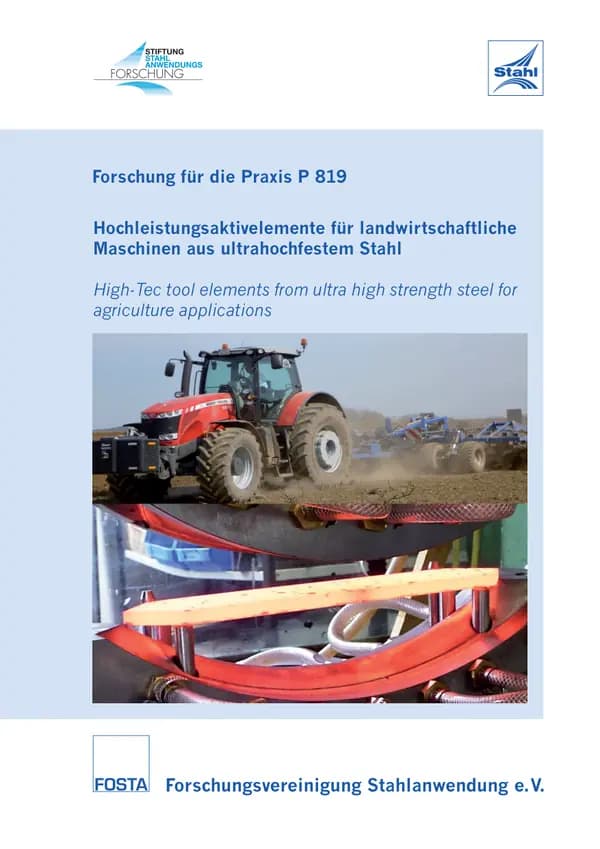
FOSTAP 819 - High-performance active elements for agricultural machinery made from ultra-high-strength steel
P 819 - High-performance active elements for agricultural machinery made from ultra-high-strength steel The motivation for this research project was to economically produce active elements for agricultural machinery with improved performance characteristics. The starting point for achieving this is the use of ultra-high-strength steels with high strength and toughness. In order to utilise the high potential of these materials and enable an economical manufacturing process, innovative manufacturing technologies were investigated and recommendations for action were derived. These include both the adjustment of favourable material properties and the shaping of the components, in particular by means of a comprehensive hot forming/press hardening process in which special shaping process elements are integrated. Martensitic hardening processes were investigated in order to achieve high component strength. This includes in particular the temperature control and the material properties that can be adjusted in this way. Furthermore, heating and quenching strategies were developed which enable increased productivity. In addition, further strength-enhancing measures were developed. This includes both thermomechanical/thermochemical hardening processes and coatings using carbide elements. In addition to adjusting the component properties, shearing or punching processes and combined punching and forming were investigated in order to enable integrated shaping in a comprehensive hot forming process. This makes it possible to compensate for any additional costs of the materials analysed, resulting in an economical solution for the manufacturer. The use of ultra-high-strength steels has shown good performance properties in field tests of various component variants and, depending on the operating conditions, has increased the service life by approx. 30%. Applied carbide elements resulted in a multiplication of the service life with a disproportionately low increase in manufacturing costs. This also provides the user with an economical solution, even if the costs for the active elements are higher. The research results obtained should be transferable to other components/production processes. This includes the application of both the investigated steels and the investigated manufacturing technologies. Due to their very good mechanical properties, ultra-high-strength steels promise great potential for improving the performance properties of existing or new types of components in other fields of application, especially in applications subject to high mechanical stress. Furthermore, the results regarding the investigated production technologies can be transferred to the processing of ultra-high-strength steels or thick sheet in other areas or for a variety of components. There is great potential here to improve both the economic efficiency of manufacturing processes and the component properties. The research results can therefore be applied to a large number of products and manufacturing processes, thus enabling new potential to be tapped for steel as a material. The research project was carried out at the Chair of Forming and Machining Technology at the University of Paderborn, with technical support and financial assistance from the Forschungsvereinigung Stahlanwendung e. V., Düsseldorf, with funds from the Stiftung Stahlanwendungsforschung, Essen. Authors: W. Homberg, T. Rostek Publication: 2014
available anytime
View details →€30.00
excl. VAT
 FOSTA
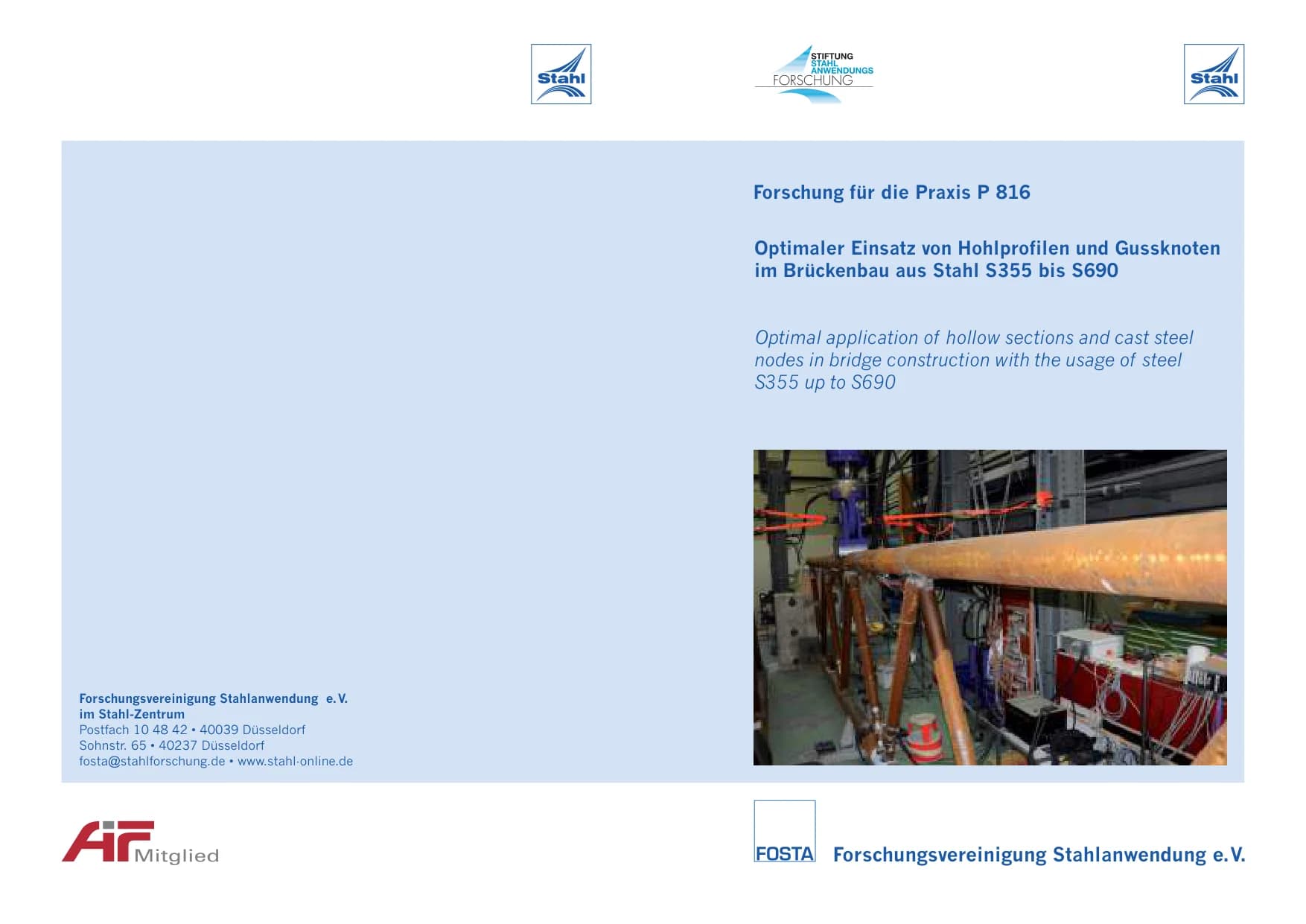
FOSTAP 816 - Optimum use of hollow sections and cast nodes in bridge construction made of steel S355 to S690
P 816 - Optimum use of hollow sections and cast nodes in bridge construction made of steel S355 to S690 Spatially resolved truss constructions made of hollow steel sections are becoming increasingly popular due to their structural and design advantages, particularly in bridge construction. However, the construction of bridges made of hollow sections is made more difficult by the fact that the section dimensions used are outside the current design rules. These are essentially based on tests with smaller wall thicknesses and on research results from the offshore industry with significantly larger profile slendernesses. In order to increase the use of this construction method and to realise bridge structures with hollow steel sections more efficiently, design rules specifically tailored to this type of structure are required that include sections with large wall thicknesses and low slenderness. In an initial research project on this problem, butt-jointed, single-sided welded connections and K-joints made of hot-rolled seamless hollow sections and cast steel components have already been investigated. In the present research project, this work was continued and supplemented by further materials up to steel grade S690 and wall thicknesses up to 40 mm. As a result, the design-relevant results already obtained for cast steel components and their connections to hollow steel sections could be placed on a broader statistical basis. In addition to the steel and cast steel connections at individual butt joints, butt joints in complete beams were also analysed. In addition, repair welds were carried out on components that had already failed, which ultimately made it possible to extend the service life. Due to the comparable material properties, the results obtained can also be transferred to pure steel-steel connections. FE investigations on the influence of wall thickness and misalignment were also carried out, as well as detailed residual stress measurements and welding simulations on K-nodes. Finally, an initial economic analysis was carried out for the different design variants. The discussion of the design effect and the influence of engineering and architectural aspects rounds off the overall assessment and shows the user options for a cost-efficient approach to planning. For practical application and for implementation in standards and guidelines, the investigated details were prepared in accordance with the notch catalogue of DIN EN 1993 and notch classes for typical bridge construction butt weld details of different design variants were developed for both bending and tensile loads. Notch class 71 proved to be decisive for all variants for butt joints under tensile stress. For butt joints under bending stress, the classification can be made into classes 100 or 112 depending on the design variant. Together with the economic feasibility studies carried out, an efficient and test-based selection of a suitable connection variant for the respective application can be made. The results obtained thus round off the previous research work and represent a necessary addition to it in terms of content for practical application. The research project was carried out at the Research Institute for Steel, Wood and Stone, Karlsruhe Institute of Technology KIT, KoRoH GmbH Kompetenzzentrum Rohre und Hohlprofile, Büro für Ingenieur-Architektur and ICOM Steel Structures, École Polytechnique Féderale de Lausanne EPFL with technical support and financial assistance from the Forschungsvereinigung Stahlanwendung e. V., Düsseldorf, with funds from the Stiftung Stahlanwendungsforschung, Essen. Authors: T. Ummenhofer, S. Herion, M. Veselcic, R. J. Dietrich, A. Nussbaumer, F. Zamiri Publication: 2014
available anytime
View details →€70.00
excl. VAT
 FOSTA
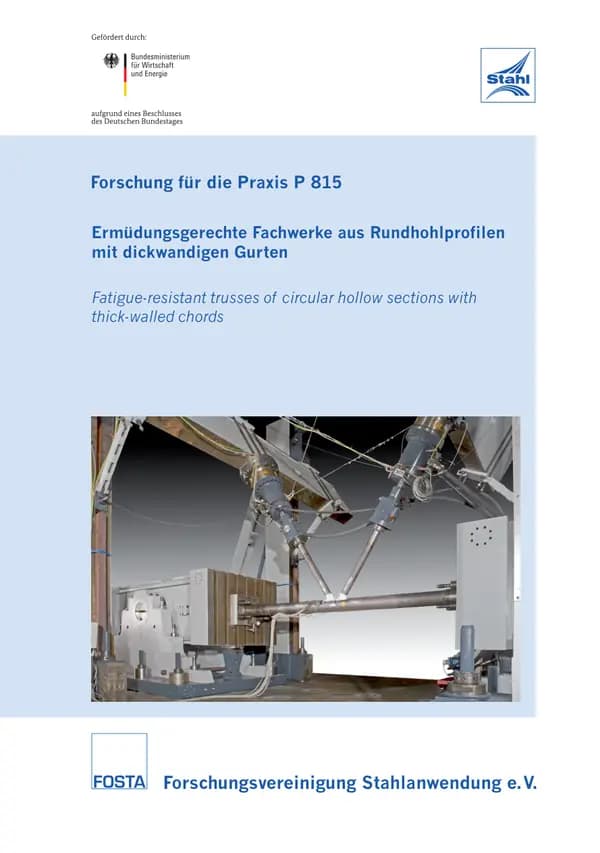
FOSTAP 815 - Fatigue-resistant trusses made of round hollow sections with thick-walled chords
P 815 - Fatigue-resistant trusses made of round hollow sections with thick-walled chords Welded round hollow section structures under fatigue loading are widely used in construction, mechanical engineering and plant engineering. Welded K-nodes made of round hollow sections, in which the chord and two adjoining struts form the shape of a horizontal "K", are particularly common and were therefore the subject of this research project. Recently, thick-walled constructions with a chord slenderness r0/t0 < 12 have been increasingly used, for the realisation of which there are still no corresponding rules. Since engineering offices and manufacturing companies do not generally have the economic resources to carry out their own series of cost-intensive vibration tests, there is a need to create easy-to-use design and dimensioning aids for welded thick-walled fatigue-stressed hollow section trusses. This results in a great potential for cost savings, especially for small and medium-sized companies. The research project therefore dealt in detail with the fatigue behaviour of plane and spatial K-nodes in thick-walled hollow section trusses from a holistic perspective. The aim was to develop recommendations for the fatigue-compliant and at the same time economical realisation of such structures. The research report summarises the state of the art in science and technology with regard to the fatigue behaviour of thick-walled hollow section structures, from which the open questions to be clarified and the test programme of this research project were derived. Special recommendations for the planning and production of thick-walled hollow section structures were developed with regard to fatigue. With a view to practical requirements, a combination of butt and fillet welds was considered as a chord-strut connection. This design has both welding and economic advantages over the pure butt weld connection. To determine the fatigue strength of thick-walled hollow section constructions, a comprehensive test programme was carried out with node vibration tests under strut loading, under chord loading and under combined loading of chord and struts. A large-scale beam vibration test was also carried out. Particular attention was paid to the aspect of the influence of size on fatigue behaviour in the lumped vibration tests. On the other hand, the focus was on investigating the influence of weld seam post-treatment using higher-frequency hammering processes, which are now available industrially, on fatigue strength. These investigations were supplemented by several small test series, which provide important information for the evaluation of post-treated hollow section constructions and for the evaluation of repair welds. The IGF project 325 ZBG of the Forschungsvereinigung Stahlanwendung e.V., Düsseldorf, was funded via the AiF within the framework of the programme for the promotion of joint industrial research and development (IGF) by the Federal Ministry for Economic Affairs and Energy on the basis of a resolution of the German Bundestag. The project was carried out at the University of Stuttgart by the Institute for Construction and Design, at the University of the Federal Armed Forces Munich by the Institute for Structural Engineering - Steel Construction, at Munich University of Applied Sciences by the Laboratory for Steel and Light Metal Construction and at Schweißtechnische Lehr- und Versuchsanstalt Halle GmbH. Authors: U. Kuhlmann, M. Euler, M. Hubmann, I. Mangerig, A. Hess, Ö. Bucak, A. Fischl, B. Kranz, J. Herrmann, R. Zschech Publication: 2014
available anytime
View details →€60.00
excl. VAT
 FOSTA
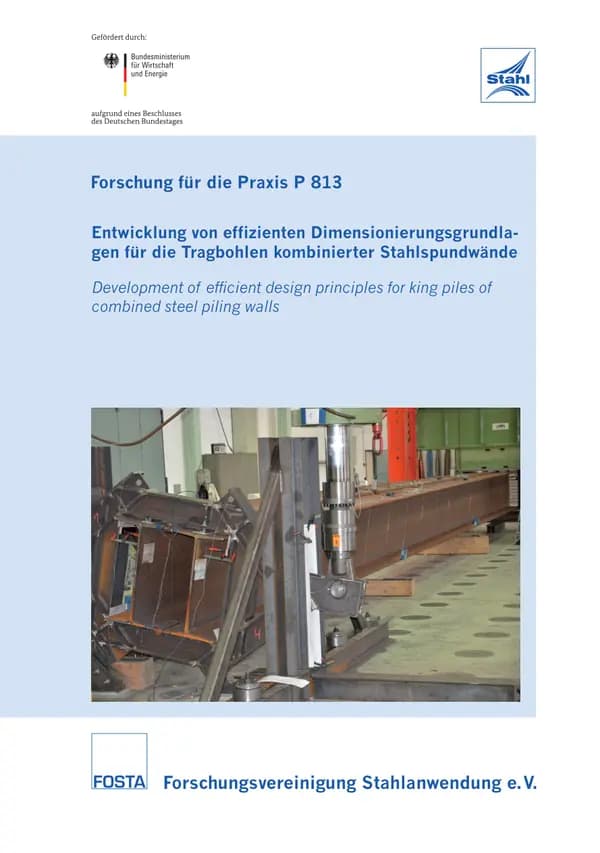
FOSTAP 813 - Development of efficient dimensioning principles for the bearing piles of combined steel sheet pile walls
P 813 - Development of efficient dimensioning principles for the bearing piles of combined steel sheet pile walls As world trade has been steadily increasing for decades, the number of containers transported and the size of ships has also increased the demands on the size of quay walls in harbour facilities. The most common steel construction solution for this in deep-water harbours is the combined steel sheet pile wall, which consists of up to 45 m long H-shaped H-shaped load-bearing piles and Z-shaped intermediate piles. Proof of stability must be provided for this construction. With the conversion of the standards from the national DIN 18800 (2008) to the European DIN EN 1993-1-1 (2010), the stability verifications in steel construction have changed. Whereas previously separate verifications could be performed for flexural buckling and lateral-torsional buckling, there is now a combined stability verification. Comparative calculations in harbour construction have shown that the new verification leads to more solid structures. What is currently not taken into account in the design is the structure-soil interaction. This project therefore served to estimate the influence of the soil and to develop ways of recognising previously unconsidered bedding. To this end, a parameter field was first defined that takes into account the current situation and developments in Europe in the near future. The depth of the basin and the nature of the soil were taken into account, as were variations in the design of the sheet pile wall and its loading. The deformation behaviour of an embedded single soldier pile and the behaviour and stiffness due to the flushing sand soil were determined experimentally. The values were used to create a framework model, which led to a parameter analysis and the determination of applicable soil parameters. At the same time, the influence of imperfections and soil bedding on the stability behaviour of soldier piles was investigated using framework models. Single and double bearing piles, different bearing conditions (especially bedding of the pile over the full length or over a partial length) and flexural buckling and lateral-torsional buckling behaviour were considered. In addition, the influence of the welding pattern and degree of welding on the torsional stiffness of partially welded double bearing piles was investigated experimentally and numerically. Based on the findings, solutions were developed to take soil bedding into account in the stability analysis. Finally, simplified criteria were derived from the soil properties, the formulae for incorporating the values into the stability analysis and the verification formulae from DIN EN 1993-1-1, Section 6.3.3 (2010), with which buckling around the weak axis and lateral-torsional buckling can be completely excluded. In summary, it can be said that the soil-structure interaction of combined steel sheet pile walls was investigated with the aid of extensive experimental and numerical investigations and approaches and simplified criteria were developed with which the influence of the soil can be taken into account in the stability analysis. The IGF project 16493 N of the Forschungsvereinigung Stahlanwendung e.V., Düsseldorf, was funded via the AiF within the framework of the programme for the promotion of joint industrial research and development (IGF) by the Federal Ministry for Economic Affairs and Energy on the basis of a resolution of the German Bundestag. The project was carried out at the University of Stuttgart by the Institute for Construction and Design and at the Technical University of Hamburg-Harburg by the Institute for Geotechnics and Construction Management. Authors: U. Kuhlmann, B. Leitz, A. Just, J. Grabe, C. Schallück Publication: 2014
available anytime
View details →€40.00
excl. VAT
 FOSTA
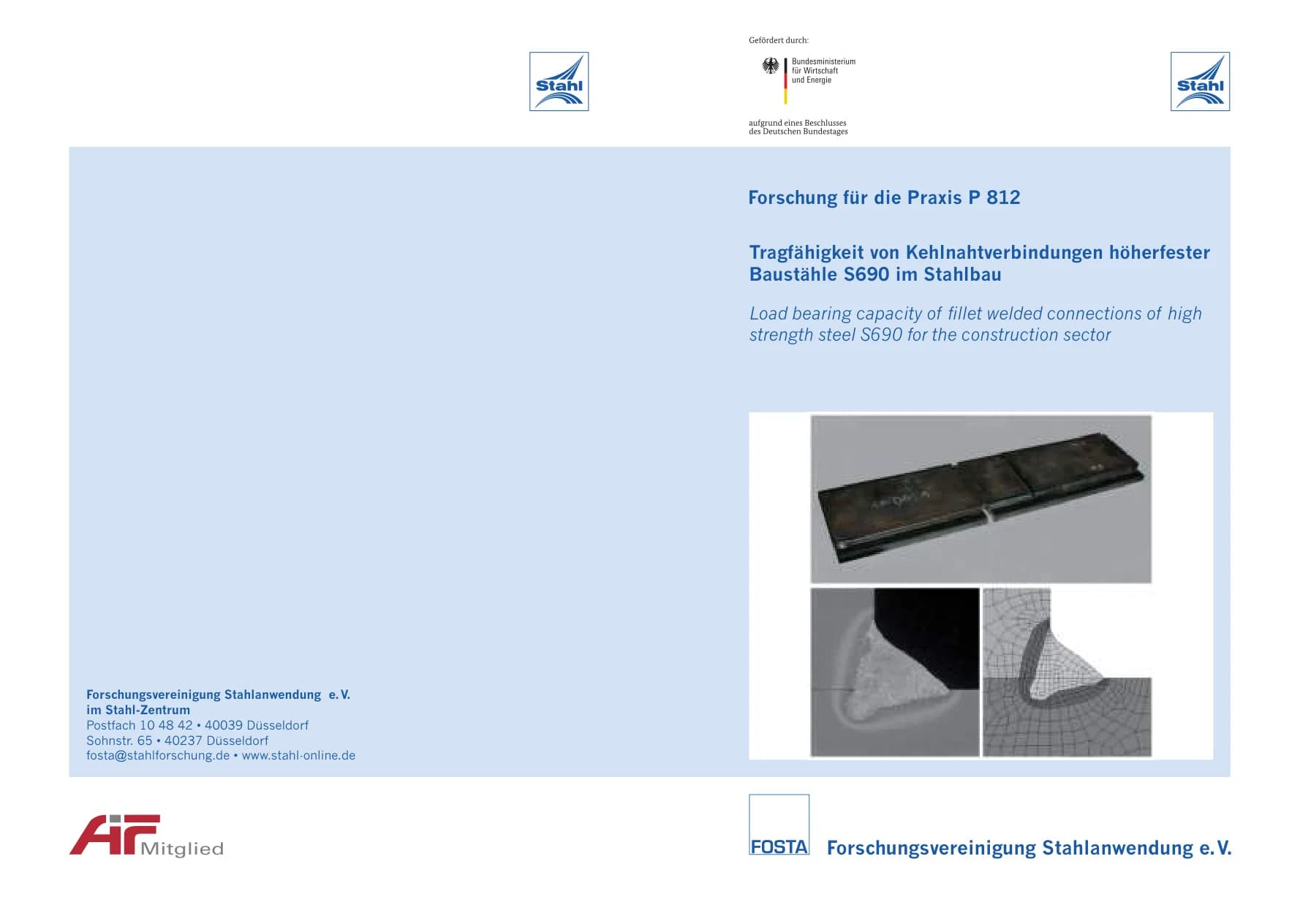
FOSTAP 812 - Load-bearing capacity of fillet welded joints of high-strength structural steels S690 in steel construction
P 812 - Load-bearing capacity of fillet welded joints of high-strength structural steels S690 in steel construction Thanks to the development of higher-strength steel materials, modern steels are now available that can be used to realise slender and lightweight constructions and save material, weight and costs. However, modern steels require new considerations in terms of their material properties such as strength, toughness and weldability, especially with regard to joining techniques and welding. The aim of the research project was therefore to develop a realistic, up-to-date design model to determine the load-bearing capacity of welded joints with fillet welds of high-strength structural steels S690 for use in steel construction. As part of the project, extensive experimental and numerical investigations were carried out to determine the load-bearing capacity of welded joints of higher-strength structural steels S690 and the decisive influencing factors. Based on the experimental and numerical investigations, a design proposal was developed for the design in accordance with EN 1993-1-8 (2005), which assesses the load-bearing capacity as a function of the base and filler material. By taking the strength of the weld filler material into account for the design, it is possible to select the optimum combination of load-bearing capacity and deformability. By developing modern design concepts and safe processing principles and improving the normative load-bearing capacity through adapted, new design concepts, an increased use of higher-strength S690 steels can be achieved and the potential utilised. The IGF project 16097 N of FOSTA - Forschungsvereinigung Stahlanwendung e. V., Düsseldorf, was funded via the AiF as part of the programme for the promotion of joint industrial research and development (IGF) by the Federal Ministry of Economics and Technology on the basis of a resolution of the German Bundestag. The project was carried out by the Institute for Construction and Design at the University of Stuttgart. Authors: U. Kuhlmann, C. Rasche Publication: 2012
available anytime
View details →€30.00
excl. VAT
 FOSTA
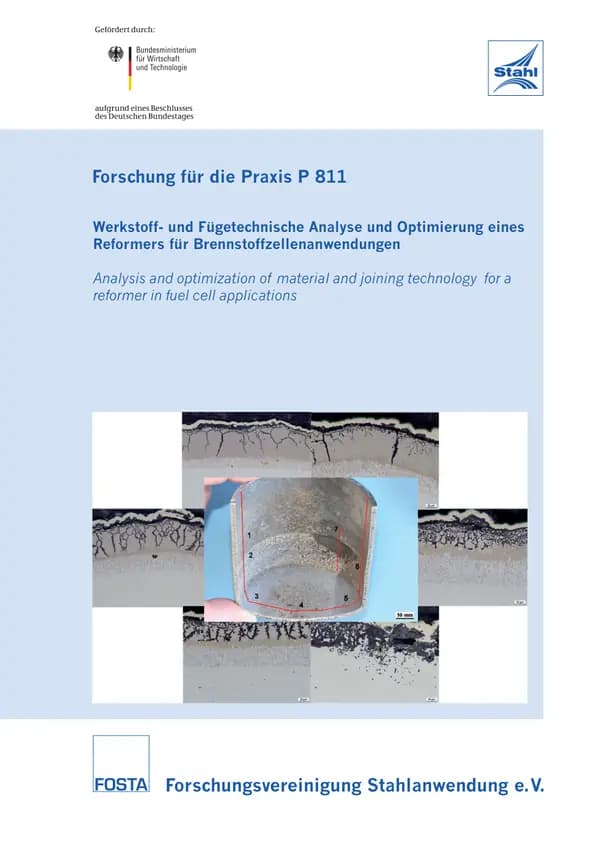
FOSTAP 811 - Material and joining analysis and optimisation of a reformer for fuel cell applications
P 811 - Material and joining analysis and optimisation of a reformer for fuel cell applications The main objective of the research project was to develop a robust combustion chamber for use in a reformer reactor for fuel cell applications. In order to achieve this goal, it was necessary to analyse operating conditions and cases of damage to reformer reactors and to carry out corresponding investigations into possible joining and coating techniques. The aim of the project was to determine which combinations of selected materials, coatings and joining techniques can be used to achieve maximum robustness under the required operating conditions. The influence of the component geometry was also analysed in this regard. The analysis of the operating conditions basically revealed three types of stress: high temperature stress (creep), thermocyclic stress (fatigue) and chemical stress (corrosion). The investigations clearly showed that the atmosphere on the burner side in particular has a very aggressive effect on the combustion chamber material. In the further course of the project, numerous tensile test specimens were prepared according to a matrix of different base materials, joining methods and coating types. Half of these samples were also subjected to a 1,000-hour thermocyclic ageing test under corrosion conditions. Subsequently, a tensile test for each sample provided information on the remaining material strength. In this way, suitable and unsuitable combinations could be determined and possible damage caused by the joining and coating itself could also be analysed. In order to investigate the influence of geometry, the thermal stresses in the combustion chamber were visualised in a computer simulation using real temperature measurement data. The weak points in the original geometry known from experiments were confirmed by high thermal stress concentrations. By varying the shape of the combustion chamber accordingly, these stresses could be significantly minimised. The final stage of the project was the construction of the new reformer reactor, taking into account the knowledge gained during the course of the project. The material 1.4958 with a specially developed aluminium diffusion layer was a suitable material coating combination. The laser welding process proved to be the most suitable joining method. For an optimised component geometry, a curvature and a transition radius to the shell surface proved to be essential design modifications for the combustion chamber cover. Finally, the new reactor was subjected to a 1,000-hour thermocyclic test under real operating conditions and later analysed for damage. The aim of the project was achieved. The basic specific damage mechanisms were determined and effective countermeasures were identified. The follow-up examinations of the optimised combustion chamber after the endurance test showed both the general durability and effectiveness of the diffusion layer, as well as the protective effect that still needs to be improved, particularly in the highly stressed centre of the combustion chamber lid. Despite this potential for improvement, no deeper damage was detected within the base material and in the area of influence of the weld seam, which can be considered a great success. It was not possible to estimate the service life beyond the 1,000-hour cycle test in this project. In future, this would require the transient simulation of the thermal stresses that occur during heating and cooling processes. Furthermore, additional findings on the long-term strength behaviour of the joined material coating systems under the specific load combination must be developed. The economic analysis of these coating systems in comparison to nickel-based materials, for example, is a further task. The IGF project 16118 BG of FOSTA -Forschungsvereinigung Stahlanwendung e.V., Düsseldorf, was funded by the Federal Ministry of Economics and Technology via the AiF as part of the programme for the promotion of joint industrial research and development (IGF) on the basis of a resolution of the German Bundestag. The project was carried out at the Zentrum für Brennstoffzellen Technik gGmbH, Duisburg, at the Günther-Köhler-Institut für Fügetechnik und Werkstoffprüfung GmbH, Jena, and by the DECHEMA Gesellschaft für Chemische Technik und Biotechnologie e.V., Frankfurt/Main. Authors: A. Heinzel, O. Pasdag, M. Steffen, E. Firat, S. Sändig, T. Ebersbach, M. Schütze, A. Naji Publication: 2013
available anytime
View details →€30.00
excl. VAT
 FOSTA
FOSTAP 810 - Bonding of mould-hardened components
P 810 - Bonding of mould-hardened components Publication: 2013 Authors: Prof. Dr.-Ing. K. Dilger, Dipl.-Ing. S. Kreling
available anytime
View details →€30.00
excl. VAT
 FOSTA
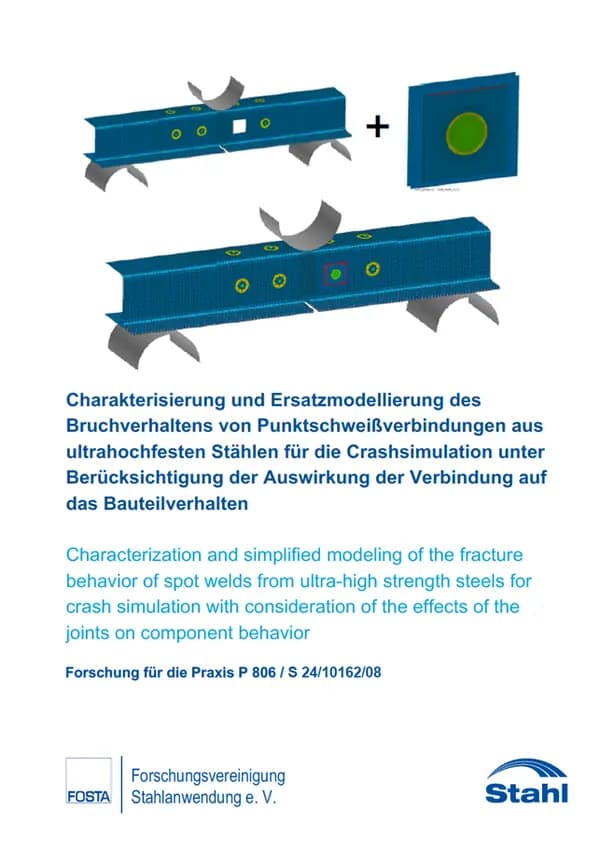
FOSTAP 806 - Characterisation and equivalent modelling of the fracture behaviour of spot-welded joints made of ultra-high-strength steels for crash simulation, taking into account the effect of the joint on the component behaviour
P 806 - Characterisation and equivalent modelling of the fracture behaviour of spot-welded joints made of ultra-high-strength steels for crash simulation, taking into account the effect of the joint on the component behaviour In automotive engineering, high-strength and ultra-high-strength steels are increasingly being used in thin sheet thicknesses for reasons of lightweight construction and to increase passive safety while at the same time conserving resources. Press-hardened components made of 22MnB5 with tensile strengths of up to 1500 MPa are already established in automotive engineering, and steel development is currently moving towards even higher press-hardening grades. Lightweight steel construction still has a great deal of development potential here to further increase energy efficiency. Currently and in the future, the established and highly automatable resistance spot welding process will be used to join individual components made of high-strength steels to form a load-bearing lightweight structure. The heat input during welding results in softening zones around the welding points of these hardened steels due to tempering effects. In order to predict the deformation behaviour of structures made of these materials, it must be possible to describe the influence of this softening zone in the simulation models. As part of the research project, spot-welded joints in the press-hardened, ultra-high-strength steel 22MnB5 were comprehensively characterised. In addition to load-dependent load capacity determination using the LWF-KS-2 testing technique, this also includes characterisation of the surrounding softening zone using specially designed specimens that contain the relevant property gradient. A substitute model for the crash simulation was thus developed that simulates both the load-bearing capacity of the joint and the formation of cracks in the surrounding softening zone. This substitute model was validated by simulating a specially designed sample component test in which an overload situation with crack formation in the softening zone occurs. The results of this research project will significantly expand the application possibilities and acceptance of press-hardened steels, as a comprehensive calculation method for spot-welded joints in this class of steel is now available for crash simulation. This means that spot-welded press-hardened steel components can be safely designed as early as the design phase. Publication date: October 2020 Authors: Prof. Dr P. Gumbsch, Dr.-Ing. S. Sommer, Dipl.-Ing. S. Burget, Prof. Dr.-Ing. habil. E. Roos, Dipl.-Ing. H.-J. Wink, Dipl.-Ing. D. Krätschmer, Prof. Dr.-Ing. O. Hahn, Prof. Dr.-Ing. G. Meschut, Dipl.-Wirt.-Ing. F. Klokkers, Dipl.-Ing. D. Hein
available anytime
View details →€30.00
excl. VAT
 FOSTA
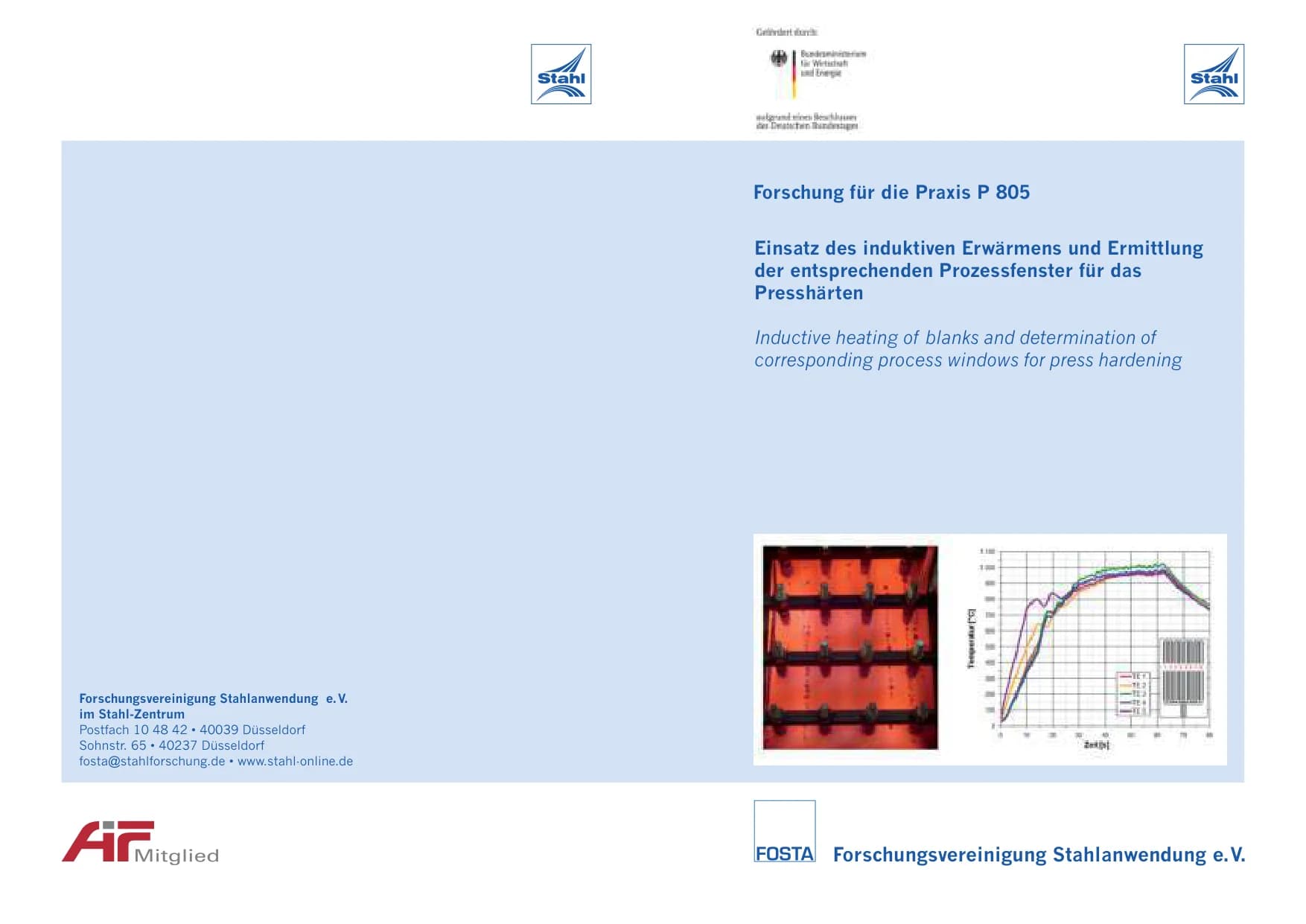
FOSTAP 805 - Use of induction heating and determination of the corresponding process windows for press hardening
P 805 - Use of induction heating and determination of the corresponding process windows for press hardening Heating in the press hardening process usually takes place in a roller hearth furnace. The main disadvantages of this heating method are high investment costs and a huge amount of space required. This increases further due to decreasing cycle times and long heating times of the blanks. As part of the research project, an innovative heating process was to be developed as an alternative to the conventional oven process for press hardening. The objectives of the research project were to set up an induction system for the homogeneous heating of a rectangular blank, to determine the process windows of the new heating technology based on this and finally to evaluate the economic efficiency of induction heating in comparison to roller-hearth heating. The homogeneous heating of the blank was achieved using a meandering inductor and an oscillating, translational movement of the blank. The temperature difference within the entire blank could be reduced to approx. 40 K, so that no significant differences in the selected mechanical properties could be determined after press hardening. Furthermore, to determine the limits of the new rapid heating process, a process window was determined by varying the heating temperatures and holding times. It was shown that by heating the material used, 22MnB5, to 900 °C within 20s without additional holding time, mechanical properties comparable to those of the conventional furnace method can be achieved. A final economic analysis showed that induction heating leads to lower production costs. However, it should be noted that the proportion of heating costs in the total component costs is relatively low. The IGF project 16319 N of FOSTA - Forschungsvereinigung Stahlanwendung e.V., Düsseldorf, was funded via the AiF within the framework of the programme for the promotion of joint industrial research and development (IGF) by the Federal Ministry for Economic Affairs and Energy on the basis of a resolution of the German Bundestag. The project was carried out at the Chair of Lightweight Automotive Engineering at Paderborn University. Authors: T. Tröster, J. Niewel, R. Salomon Publication: 2014
available anytime
View details →€30.00
excl. VAT
 FOSTA
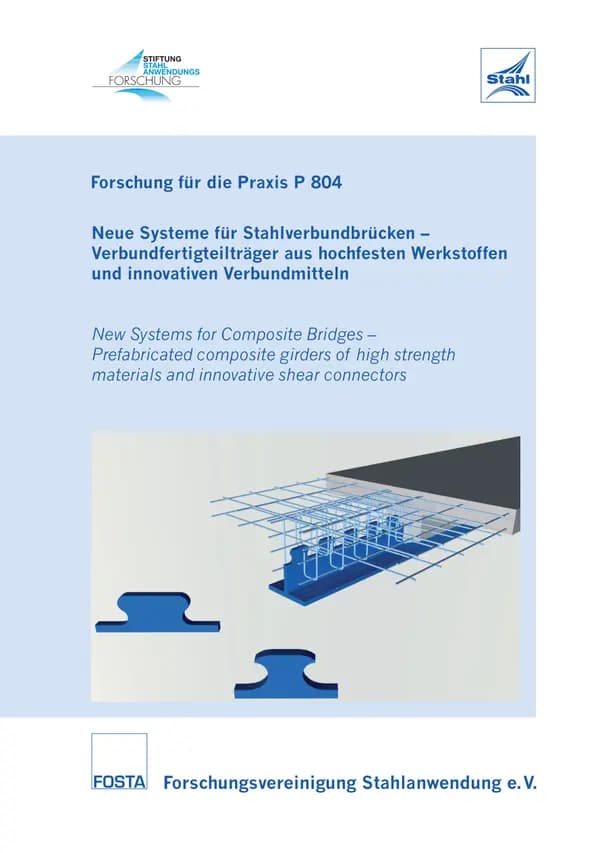
FOSTAP 804 - New systems for steel composite bridges - Composite prefabricated girders made of high-strength materials and innovative composite materials
P 804 - New systems for steel composite bridges - Composite prefabricated girders made of high-strength materials and innovative composite materials Prefabricated composite bridge systems are being used more and more frequently for small and medium spans. The safe transfer of high shear forces in the composite joint under static and non-static loads can be efficiently achieved using composite dowel bars. The advantages lie in particular in the high load-bearing capacity, the sufficient deformation capacity and the simple use in steel profiles without top flanges. However, application is difficult due to the lack of standardised regulations. The main objective of the research project was to prepare a company-neutral general building authority approval (AbZ) for composite dowel bars. In preparation for the experimental investigations, the static and design requirements for the composite materials in prefabricated composite bridge systems were defined on the basis of three selected practical examples. Open questions were identified on the basis of a summary of the latest research results from static and cyclic shear and beam tests, numerical simulations and design concepts and transferred into a test matrix with 18 static and 6 cyclic shear tests and 4 cyclic beam tests. The static shear tests prove that the failure modes "punching out" and "steel failure" can be categorised as ductile with sufficient restraint by stirrups. In the case of plate girder cross-sections with composite dowel bars as external reinforcement, the load-bearing capacity can be significantly increased and good deformation capacity can be achieved using strapping stirrups. Without stirrups, a very brittle behaviour occurs. In the case of parallel composite dowel bars, the influence of spacing must be taken into account in the punching criterion, as the punching cones influence each other and the load-bearing capacity is reduced. Without shear reinforcement, a minimum spacing must be defined, as ductility is negatively affected as the spacing decreases. The stress concentration factors required for the design of the steel strip according to the structural stress concept were determined by means of strain measurements on the steel teeth in the cyclic shear tests and beam tests. Both the stresses from the transfer of longitudinal shear forces and from the global bending load-bearing effect were taken into account. The measurement results show good agreement with FE calculations. It was also shown that concrete fatigue in the form of cyclic punching out can occur under high top loads and that damage to the bond joint can also occur. The assumption of a rigid bond joint is therefore no longer justified and higher loads may result. A statistically validated design concept was developed on the basis of a detailed database, supplemented by the results and findings of our own tests and numerical analyses. The design concept includes the static failure types of shearing, punching out including the influence of spacing, vertical splitting and steel failure as well as steel fatigue, concrete fatigue and ensuring a rigid bond joint under cyclic loads. The research project was carried out by the Chair of Steel Construction and Light Metal Construction and the Chair of Solid Construction at the Rheinisch-Westfälisch Technische Hochschule Aachen, as well as SSF Ingenieure AG, Munich, with technical support and financial support from the Forschungsvereinigung Stahlanwendung e. V., Düsseldorf, with funds from the Stiftung Stahlanwendungsforschung, Essen. Authors: M. Feldmann, M. Gündel, M. Kopp, J. Hegger, J. Gallwoszus, S. Heinemeyer, G. Seidl, O. Hoyer Publication: 2014
available anytime
View details →€40.00
excl. VAT
 FOSTA
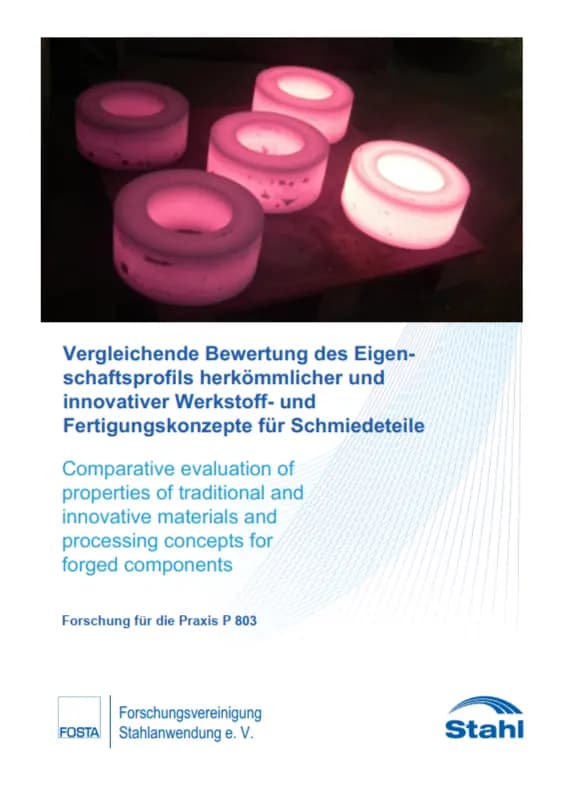
FOSTAP 803 - Comparative evaluation of the property profile of conventional and innovative material and manufacturing concepts for forgings
P 803 - Comparative evaluation of the property profile of conventional and innovative material and manufacturing concepts for forgings The aim of the research project was to verify the performance of precipitation-hardened case-hardening steels and a precipitation-hardened bainitic steel with new alloying concepts for forgings in direct comparison with previously used steels. The conventional reference materials used for the case-hardening steels were 20MnCr5 (WS1), 15CrNi6 (WS3), 18CrNiMo7-6 (WS4) with controlled sulphur content and 18CrNiMo7-6 with ultra-low sulphur content (WS5) as well as the two modified variants 20CrMo5mod (WS2) and 26MnCrNiMo6-5-4mod (WS6) - both containing the microalloying elements V, Ti and Nb - were used. The modified bainitic steel was analysed in comparison with the classic quenched and tempered steel 42CrMo4 and the conventional AFP steel 38MnVS6. The fundamental mechanical properties as well as fatigue strength and fracture toughness values were determined for all materials. The high-strength case-hardening steel 26MnCrNiMo6-5-4mod has a core strength of 1750 MPa, which is significantly higher than the 1400 MPa formulated in the application, albeit with only acceptable toughness properties. As expected, the fatigue strength in the smooth, blind-hardened condition is greater than that of the reference case-hardening steels. In the notched, case-hardened condition, the fatigue strengths of all the case-hardening steels analysed lie within a scatter band. This is attributed to the same properties of the surface layer for all case-hardening steels. In the case of the case-hardened fork shackles and the gear wheels, the numbers of cycles at break and the fatigue strengths of all the steels analysed were in a common scatter band, just as with the notched samples. In contrast, the fatigue strength of the WS6 26MnCrNiMo6-5-4mod is significantly higher than that of the reference steel 18CrNiMo7-6 in the case-hardened and additionally shot-peened gear shafts. The alloy concept used here to adjust the strength properties is economically less favourable than in the case-hardening steels based on MnCr, CrMo or CrNi, although it is comparable to that of 18CrNiMo7-6. The target yield strength of > 800 MPa steel was not achieved for the bainitic steel. The bainite exhibits acceptable toughness properties. The smooth samples of the modified bainite tend to exhibit better fatigue strength than the reference heat-treatable steel 42CrMo4, and the notched samples even exhibit significantly better fatigue strength. The component tests using the track lever as an example, on the other hand, showed a lower fracture fatigue strength for the modified bainitic material compared to the reference material. The bainitic steel 12CrMnMoV7-5mod is economically more favourable compared to the conventional quenched and tempered steel when used for components. This is mainly due to the lack of tempering treatment, i.e. controlled cooling without subsequent reheating. One aim of further research activities is to clarify the microstructural cause of the good fatigue strength and to improve the toughness properties of the bainite, resulting in characteristic values that designers can use to design specific components made from the new materials in the mechanical and plant engineering, vehicle construction, drive technology and power generation sectors. Publication: 2017 Authors: Dr.-Ing. Kaiser, Dr.-Ing. D. Schwerdt
available anytime
View details →€40.00
excl. VAT
 FOSTA
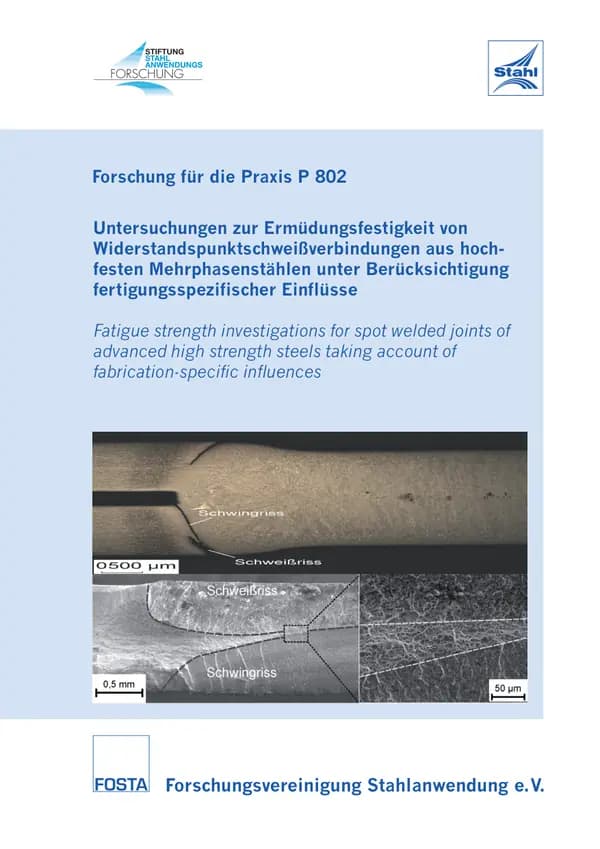
FOSTAP 802 - Investigations on the fatigue strength of resistance spot welded joints made of high-strength multiphase steels under consideration of production-specific influences
P 802 - Investigations on the fatigue strength of resistance spot welded joints made of high-strength multiphase steels under consideration of production-specific influences Under the harsh conditions in automotive body-in-white production, welding-related imperfections such as cracks cannot always be avoided during resistance spot welding of high-strength steels. Knowledge of the influence of such cracks is of considerable importance for safe design. The influence of such imperfections on the fatigue strength of high-strength steels was therefore investigated as part of this research project. Various methods were analysed for the targeted production of cracks and, based on the results, four methods for the production of weld cracks were applied. By cooling the joint during the welding process, surface cracks could be produced in the area of the electrode indentation. By using a special specimen geometry and welding sequence (so-called 4-spot specimen), cracks could also be specifically produced in the heat-affected zone (HAZ). In addition to these welding cracks produced in the real welding process, simulated welding cracks were also produced and analysed. For example, spark erosion was used to create crack-like surface notches in the HAZ. As cracks inside the spot-welded joint can only be produced to a limited extent using welding technology, sawn internal notches were also simulated. The influence of the cracks on the fatigue strength was analysed by comparing the stiffness curves of crack-free reference samples and welded samples with weld cracks of the above-mentioned shape. A sample stiffness drop of 30 % was defined as the failure criterion. The results of the tests on specimens with surface cracks in the electrode indentation and in the HAZ show that both the stiffness curve (crack propagation) and the failure cycles are not negatively affected. For specimens with cracks in the HAZ, it could be demonstrated that the fatigue cracks can both connect with the welding cracks and cross them. It is noteworthy that despite this direct interaction between the welding crack and the fatigue crack, no change in the fatigue strength could be determined. Using fractographic methods, it was also demonstrated that the location of the crack initiation is also not influenced by the welding crack. For the simulated external cracks (eroded) with different geometries as well as for the internal cracks in the area of the HAZ, no significant influence on the fatigue strength could be proven on the basis of the stiffness curves, despite direct interaction between the weld crack and the fatigue crack. The research project was carried out at the Federal Institute for Materials Testing and Research (BAM), Berlin, with technical support and financial assistance from the Forschungsvereinigung Stahlanwendung e. V., Düsseldorf, with funds from the Stiftung Stahlanwendungsforschung, Essen. Authors: M. Rethmeier, G. Weber, H. Gaul, S. Brauser Publication: 2011
available anytime
View details →€30.00
excl. VAT