 FOSTA
FOSTAP 327 - Comparative assessment of the fire behaviour of different structural steels to determine fire-resistant steel structures without additional fire protection measures
P 327 - Comparative assessment of the fire behaviour of different structural steels to determine fire-resistant steel structures without additional fire protection measures Authors: G. Sedlacek, C. Heinemeyer Publication: 2003 The choice of the material for structural elements between e.g. steel, wood or concrete depends on the experiences of the designer with the specific material and planning reliability that can be achieved in early design stages of the project. On aspect for choice of materials is fire safety. Therefore it is usually proved if the structural element fulfils general requirements given by codes or other regulations. These general requirements give classifications for the performance of structural members under ISO-fire condition. The lowest level of load bearing classification under ISO-fire can in most cases on be achieved by using protections systems for the structural elements. The use of protection systems such as coating or cladding of the elements leads to uneconomic solutions for steel structures and architectural design aspects cannot be fulfilled. One possibility to realize fire safe, economic and unprotected steel structures is the global fire safety design which considers realistic fires (Natural fires) and which allows to estimate the load bearing resistance under these fire conditions. (Visible steel by invisible protection measures.) To perform global fire safety design all influences on the definition of a fire have to be known. This is a disadvantage of this design procedure because all these influences are not surely known until a later design stage of the project is reached.
available anytime
View details →€25.50
excl. VAT
 FOSTA
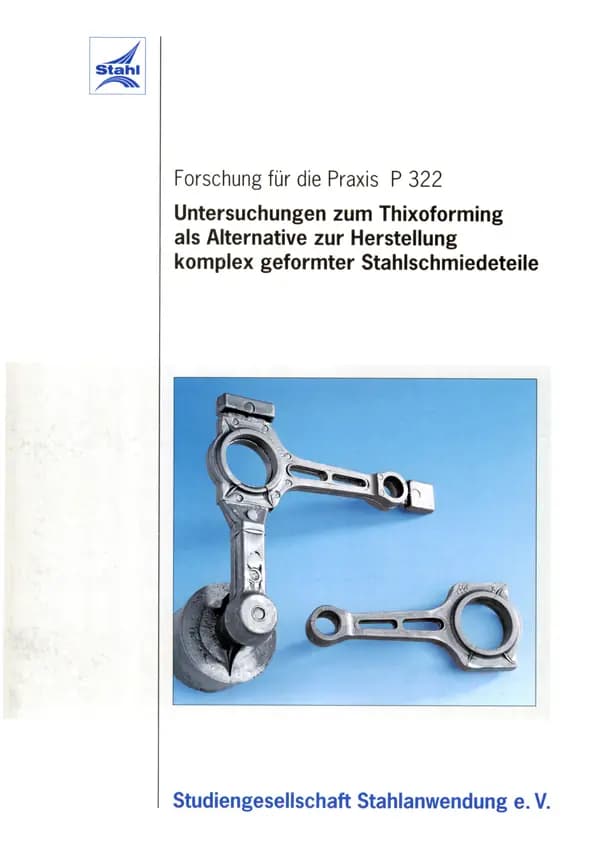
FOSTAP 322 - Investigations into thixoforming as an alternative for the production of complex shaped steel forgings
P 322: Investigations into thixoforming as an alternative for the production of complex shaped steel forgings Thixoforming as a way of shaping metals within the temperature range between the solid and liquid state means combining the process-specific advantages of casting to produce complex geometries and forging to achieve excellent mechanical properties. The aim of this research project was to apply this processing method, which is already used industrially for aluminium, to steel materials that melt at significantly higher temperatures. In addition to material-related questions, fundamental process-related questions also had to be clarified. Using three standard steel grades selected as examples - quenched and tempered steel (C45R and 41Cr4) and a connecting rod material (C70S6, rolled and stretched) - it was shown that a homogeneous, globular microstructure can be set as the required processing condition. The promising possibilities of developing process-optimised alloys have not yet been exploited. Further shaping tests were carried out on a sintered connecting rod as an example of the high mould complexity of a mass-produced product manufactured with relatively low tooling costs. This component impressively demonstrated the high flowability of the selected material C70S6 and the very good contour reproduction. The introduction of scale was avoided by taking suitable measures in the mould construction. The inhomoginities found in some of the sample components can be avoided by optimising the initial microstructure and the moulding and cooling conditions. Overall, the results of the research work are so encouraging that the industrial feasibility of the process can be recognised. A high degree of design freedom combined with a low component weight are the technical and economic potential for an innovative process technology for the industrial production of near-net-shape blanks. STUDIENGESELLSCHAFT STAHLANWENDUNG e.V. Publication: 1999 Authors: Dipl.-Ing. D. Koesling, Dipl.-Ing. Ch.n Tinius, Dr.-lng. R. Cremer, Dipl.-Ing. U. Morjan, Dipl.-Ing. B. Nohn, Dipl.-Ing. T. Wittstamm, Dr.-Ing. T. Witulski
available anytime
View details →€30.00
excl. VAT
 FOSTA
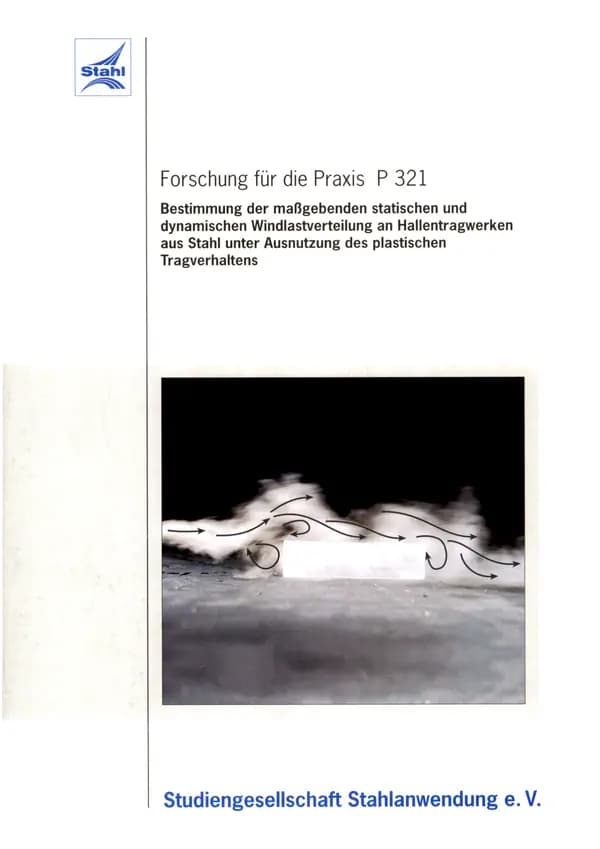
FOSTAP 321 - Determination of the decisive static and dynamic wind load distribution on steel hall structures using the plastic load-bearing behaviour
P 321: Determination of the decisive static and dynamic wind load distribution on steel hall structures using the plastic load-bearing behaviour The design of load-bearing structures in civil engineering is based on the limit load under maximum possible stresses. With regard to the actions to be applied, e.g. due to weather events, certain standard values are used in the calculation. The decisive wind load to be applied here is currently still based on elastic load-bearing behaviour. However, modern regulations allow the design on the plasticised system, which results in a redistribution of the internal forces compared to the elastic calculation. For the plastic design, no wind load relevant to the design can be taken from the current standards. This is where the research objective of the project comes in: By investigating in particular the interaction between the time course of the wind effects and the elastic-plastic structural reactions of hall buildings of standard dimensions, realistic failure limits were to be determined in order to improve the accuracy of the design. The time histories of the wind pressure distributions on the windward, leeward and roof sides were determined in a wind tunnel using models of hall structures. From this, the static and dynamic reactions of a hall frame up to failure were determined in time step calculations. Excessive lateral deformations or material fatigue due to repeated plastic deformations were used as failure criteria. The results show that the previous designs are on the safe side if only the wind load assumptions (see EUROCODE 1 - Part 2.4) are used. The load redistributions in the steel structures form a load reserve of up to 9 %. However, if one assumes the combination factors for wind plus snow, then the load reserve is even higher due to a reduction in the load assumptions, and thus a change in the standard (EUROCODE 1 - Part 2.3 Snow / 2.4 Wind) is indicated. It has also been shown that no increase in safety factors is necessary due to allegedly insufficient reserves in light steel structures. A comparison of these results with an evaluation of data from the German Weather Service on the probability of the interaction of snow and wind for a few locations and examples showed that excessive combination coefficients had always been calculated. Further investigations are currently underway to determine the general validity of these findings. An adaptation of the calculation to the real effects of the load combinations will lead to more economical load-bearing structures. STUDIENGESELLSCHAFT STAHLANWENDUNG e.V. Publication: 1999 Authors: Prof. Dr.-lng. G. Sedlacek, Dr.-Ing. W. Zillinger, Dipl.-Ing. O. Krau
available anytime
View details →€50.00
excl. VAT
 FOSTA
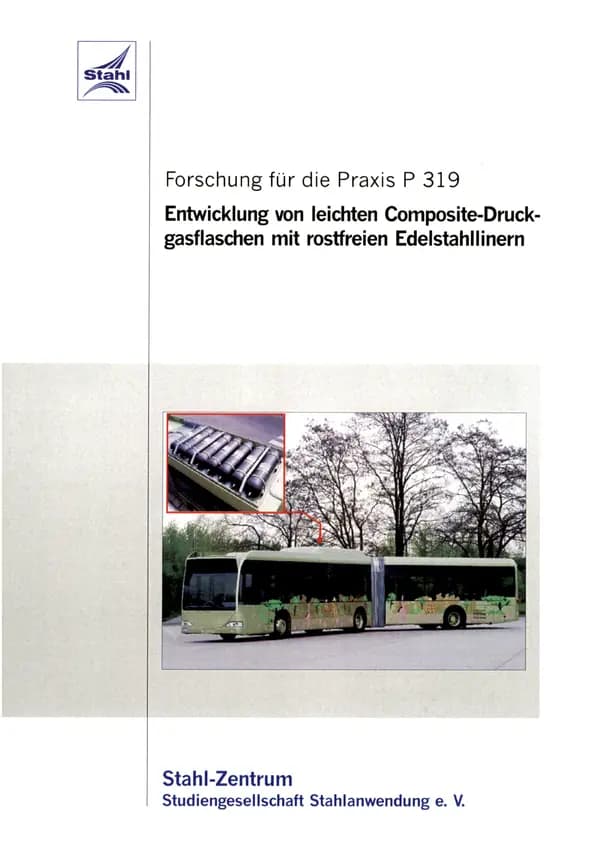
FOSTAP 319 - Development of lightweight composite pressurised gas cylinders with stainless steel liners
P 319: Development of lightweight composite pressurised gas cylinders with stainless steel liners The use of gaseous fuels for the operation of vehicles is becoming increasingly important. As these should be as light as possible in order to reduce fuel consumption or increase the range, weight-optimised compressed gas cylinders are required. The aim of the research work was to further develop corresponding steel-based composite tanks with carbon fibre wrapping. This is associated with the expectation of increased acceptance of gas-powered vehicles and a more favourable use of energy resources from an ecological point of view. Initial attempts to reduce the wall thickness by using higher-strength variants of the steel 34CrMo4 (1.7220) introduced in pressure vessel construction by modifying it with titanium and boron were not successful. Sufficient safety against stress corrosion cracking could not be demonstrated. Attempts to strengthen welded steel liners made of austenitic material were also unsuccessful. When using the steel grade X5CrNi18-10 (1.4301) with a wall thickness of 1.3 or 1.7 mm, premature failure occurred in the internal pressure swelling tests, which are important for an acceptance procedure, due to the early formation of fatigue fractures starting from the longitudinal or circumferential weld seams of the liner. The greater elastic elongation of the carbon fibre winding compared to steel and the reduced yield point heat-affected zone of the TIG weld seam caused alternating plasticisation of the seam area and triggered premature leakage there. Replacing conventional circumferential welds with laser welds was also unable to sufficiently improve the swelling behaviour. In addition, an edge offset in the circumferential weld area, which could only be avoided by cost-intensive measures, prevented a positive test result. Only the third approach, using cryo-stretched, austenitic stainless steel liners made of X2CrNi19-11 (1.4303) steel, finally showed the possibility of a technically and economically favourable solution. The entire liner, including the longitudinal weld seam, is highly strengthened by cryoforming. Carbonisation tests on this core container variant showed that the service life requirements can be met without restriction. As a result of the work, a weight reduction of approx. 20 % and reliable control of the material behaviour, e.g. avoidance of fatigue cracks and corrosion phenomena, should be emphasised. By optimising the fibre composite and core container wall thickness, a further weight reduction of > 50 % compared to solid steel cylinders is possible according to current knowledge. These results open up promising application possibilities for steel as a material, even with further increased requirements for pressurised gas containers, e.g. for vehicles powered by natural gas. STUDIENGESELLSCHAFT STAHLANWENDUNG e.V. Publication: 2002 Authors: Dipl.-Ing. G. Junker
available anytime
View details →€20.00
excl. VAT
 FOSTA
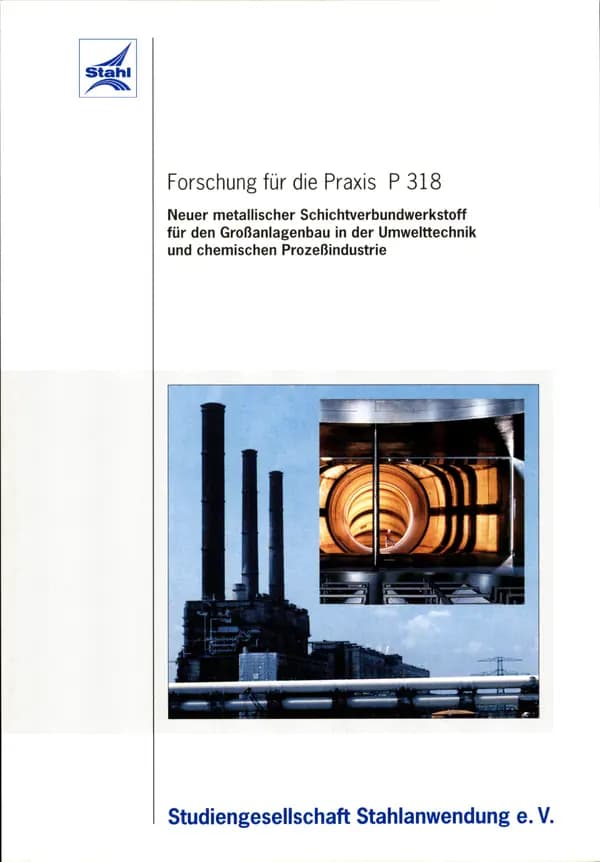
FOSTAP 318 - New metallic layered composite material for large-scale plant construction in environmental technology and the chemical process industry
P 318: New metallic layered composite material for large-scale plant construction in environmental technology and the chemical process industry The aim of the research project presented here was the production and process engineering qualification of a new highly corrosion-resistant metallic layered composite material based on steel, to which a nickel-based alloy with a sheet thickness of around 1 mm was bonded as a corrosion-resistant coating. This made it possible to provide a more cost-effective alternative to organic-based corrosion protection systems, which is characterised by the technical advantages of a metallic design - such as high corrosion resistance and wear resistance. This solution was made possible by the operationally secured provision of 1 mm thick Ni-based alloy sheets and strips. This research report describes the requirements profile for the new metallic bonded laminated composite material from the perspective of manufacturers, users and processors. It also provides an overview of the characterisation of the adhesives and adhesive technology used on a laboratory and industrial scale. The bonded metallic layered composite material proved its resilience under various practical ageing stresses. In addition to answering processing-related questions such as cold formability or plasma cutting, a non-destructive testing method was developed for the bonded metallic layered composite on an ultrasonic basis. Practical findings on the cold formability of the bonded metallic layered composite material were underpinned by FEM calculations. The weldability of the bonded metallic layered composite material was investigated to a large extent under workshop and construction site conditions. The positive results obtained in the laboratory and workshop with the bonded metallic layered composite material were confirmed in field tests under practical conditions. Furthermore, the field tests described above demonstrated that the results obtained also provide a technically manageable and cost-effective concept for the metallic restoration of damaged rubber coatings, organic coatings or GRP components in environmental engineering. The layered composite material has been included in the processing range of a major German plant manufacturer; the apparatus and reactor construction company has thus expanded its range of materials. On the basis of the adhesive bonding technology developed for operational use, repair offers have been submitted for two cases of damage (metallic cleaning channel and organically internally coated flue gas stack), which the operators have to decide on when awarding contracts for the necessary repairs to corrosion damage. STUDIENGESELLSCHAFT STAHLANWENDUNG e.V. Publication: 2000 Authors: Dr rer. nat. I. Rommerskirchen
available anytime
View details →€20.00
excl. VAT
 FOSTA
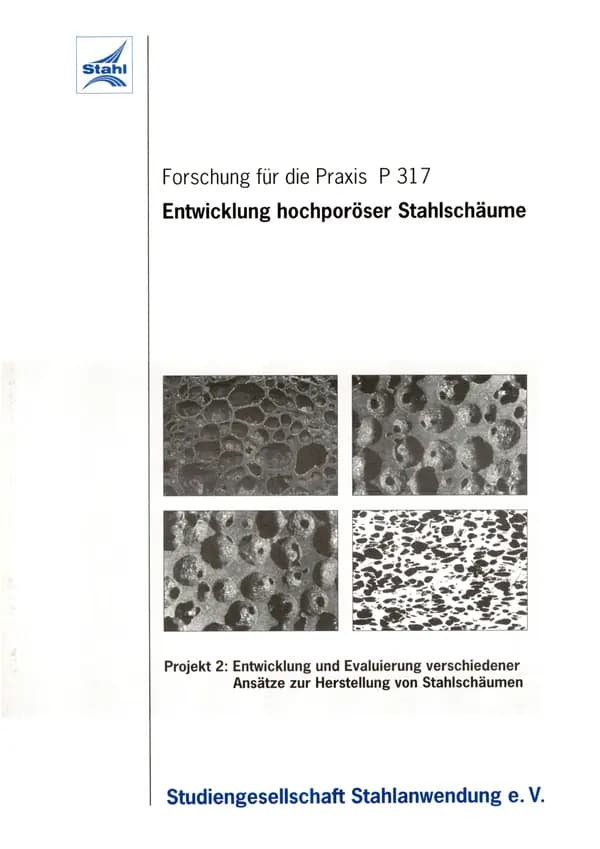
FOSTAP 317 - Development of highly porous steel foams Project 2 - Development and evaluation of different approaches for the production of steel foams
P 317: Development of highly porous steel foams Project 2: Development and evaluation of different approaches for the production of steel foams Highly porous materials with a cellular structure are characterised by their low specific weight and high stiffness. The little known fact that metals with a cellular structure can also be produced is the basis of numerous research approaches to produce lightweight materials. Recent developments in the field of metal foams prompted the Studiengesellschaft Stahlanwendung e.V. and the two research participants in Bremen and Aachen to investigate the production possibilities and areas of application of highly porous steel materials. Closed-cell steel foams can be produced by transferring the "blowing agent process", which is already used for low-melting-point metals on a semi-industrial scale. Promising results have been achieved with the research work for iron-carbon alloys, which have yet to be transferred to high-alloy steel grades. Three different processes have been investigated for the production of open porosity in steel foams, namely working with spacer materials, reaction sintering of iron and aluminium powders and foaming of MIM feedstock. The investigated possibilities of producing steel foam by powder metallurgy have proven to be promising: The production of larger volumes of material is the next task for further research. Melt metallurgical processes for the production of highly porous iron-based foams have also been investigated. According to the available findings, it appears difficult to produce closed-pored structures. On the other hand, it is possible to produce open-pored steel foams by recasting spacer materials or using the investment casting process. Further development of the test equipment used will make it possible to produce larger sample volumes in the future. Particularly in view of the prospective market study that precedes the present investigation, the production of open-pored structures of steel foams appears to be very promising. After the encouraging first step within the framework of a study to identify innovative fields of application for steel foams, the research results presented here have shown concrete possibilities for the production of closed-pore and open-pore steel foams on a laboratory scale, so that the step towards the semi-industrial production of larger steel foam volumes can now be tackled. STUDIENGESELLSCHAFT STAHLANWENDUNG e.V. Publication: 1998 Authors: Dr.-Ing. M.Weber, Dr.-Ing. M. Knüwer, Uni. Prof. Dr.-Ing. W. Bleck
available anytime
View details →€20.00
excl. VAT
 FOSTA
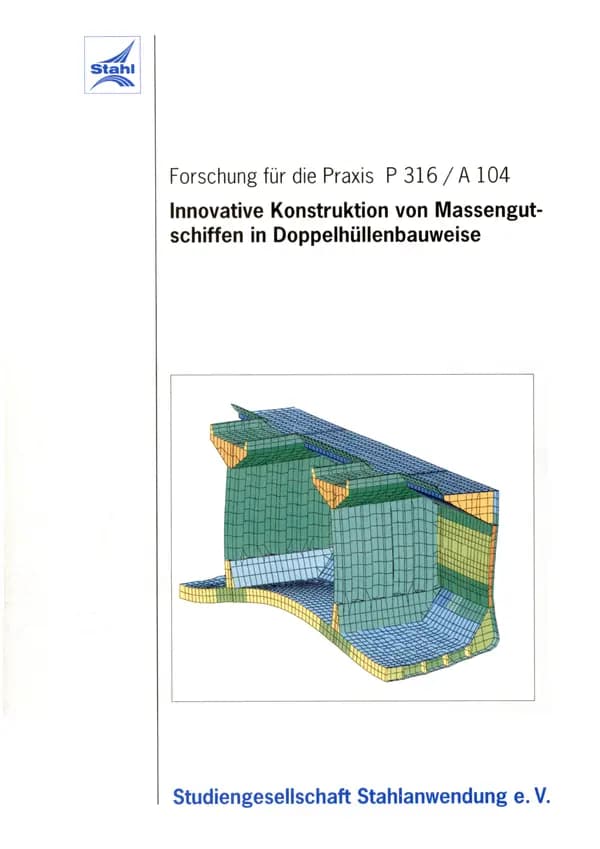
FOSTAP 316 - Innovative construction of bulk carriers in double-hull design
P 316: Innovative construction of bulk carriers in double-hull design In view of the high average age of the bulk carrier fleet of over 17 years - with a normal service life of 20 to 25 years - this type of ship is definitely of interest to the German and European shipyard industry if innovative solutions can be found to compensate for the cost disadvantage compared to international, particularly Asian, competitors. In the present research project, the constructive development of a bulk carrier in double-hull design has been analysed for an optimal solution with critical consideration of different variants. The prototype development is intended to create the conditions for a quick and targeted response to specific enquiries without the need for time-consuming preliminary investigations. As part of the innovative approach, this type of ship was also to be used as an example to investigate the extent to which new steel materials, semi-finished products and production methods can be used to improve quality and ensure competitiveness. The project was applied for by Germanischer Lloyd, Hamburg, and Flensburger Schiffbaugesellschaft at the Studiengesellschaft Stahlanwendung e.V. and the Forschungsvereinigung der Arbeitsgemeinschaft der Eisen und Metall verarbeitenden Industrie e.V. (AVIF) - through the Forschungszentrum des Deutschen Schiffbaus e.V. (German Shipbuilding Research Centre). Germanischer Lloyd is an internationally active organisation for the classification of ships of all kinds. Flensburger Schiffbaugesellschaft is a medium-sized shipyard that builds a wide variety of ship types up to a carrying capacity of approx. 80,000 tonnes. The research and development specialists from the above-mentioned companies were assisted by materials specialists from the steel industry (AG der Dillinger Hüttenwerke, Krupp Hoesch Stahl AG, Preussag AG, Stahlwerke Bremen GmbH and Thyssen Stahl AG); in addition, experts from the production technology sector were also involved. The solution developed was finally subjected to an economic efficiency comparison, which also included the operating costs including the expected maintenance and repair costs. The shipping company Egon Oldendorf, Lübeck, which operates in the bulk shipping sector, was involved in this analysis. The result shows an advantage for the research result with a long service life. On the basis of a 75,000 tdw bulk carrier, the conventional design with a single outer skin on the sides of the ship was compared with several constructive variants of the double-hull design. The elaboration of the designs showed that the steel weight and thus also the load-bearing capacity is almost the same for the different variants. In the case of the conventional design, the planned, internationally agreed additional requirements with regard to strength in the event of a leak have already been taken into account. A minor disadvantage of the double-hull design is the slightly smaller cargo hold volume and the somewhat higher construction costs. Apart from the positive safety aspects, there are clear advantages, especially during the operating time. A profitability calculation showed that the cleaning costs after unloading and maintenance costs in particular are lower for the double-hull bulker. In addition, better availability and a higher residual value can be assumed. A net present value calculation, assuming realistic cost estimates, showed that overall the double-hull design is the more economical option. However, a novel idea with a shell-shaped inner hull on the sides of the ship proved to be too heavy and too expensive, although there may be further potential for optimisation. Based on the results for the other variants of the double-hull bulker, however, it can generally be stated that it is not only aspects of ship safety and component redundancy that speak in favour of a fundamental change in the design of bulk carriers. In addition to the design and constructional elaboration and economic feasibility study of the different variants, the project also analysed aspects of the use of materials, production and the improvement of the strength and corrosion resistance of the inner bottom. It is to be expected that in the latter - apart from the transverse bulkheads - most mechanical damage and corrosion phenomena will occur in a double-hull bulker, so that the service life of the structure will be decisively influenced by innovative solutions. STUDIENGESELLSCHAFT STAHLANWENDUNG e.V. Publication: 1998 Authors: Dr.-Ing. W. Fricke, Dipl.-Ing. R. Nagel
available anytime
View details →€30.00
excl. VAT
 FOSTA
FOSTAP 312 - Development of a rotating arc sensor system for the detection and processing of joint shape and geometry when welding sheet steel
P 312 - Development of a rotating arc sensor system for the detection and processing of joint shape and geometry when welding sheet steel When stiffeners (Holland profiles, flat bars, etc.) are mounted on panels and sheet metal, component tolerances, bevelled cut edges (plasma cut) or curves at the base of the profile, etc., result in tolerances in the joint preparation for subsequent fillet welding. Tolerances in the joint preparation for the subsequent fillet weld. Differing air gaps between the profile and the sheet, insufficient squareness and seam runs that deviate laterally from the nominal contour make the use of automatic welding systems difficult. The welding robots previously used at Howaldtswerke - Deutsche Werft AG (HDW) in micro-panel production and in double bottom production (Hall 4 and Hall 10) are equipped with an arc sensor system. By oscillating the welding torch transversely to the welding direction, the centre of the fillet is detected and tracked due to the different arc lengths and thus changing welding voltages. The disadvantage of this arc sensor system is that the performance of the welding process cannot be fully utilised due to the oscillation. Above certain process parameters, melting notches occur on the web and the appearance of the seam deteriorates. Attempts to weld more powerful cored wires with this sensor system show this phenomenon to an even greater extent. Further disadvantages are that expensive pulse welding power sources are also required for the conventional MAG welding process and that the permanent pendulum movement leads to wear in all torch axes. In order to avoid the transfer of the oscillation to the entire gantry, very complex and expensive welding gantry supports have been designed. Until now, it has not been possible to measure the air gap and make corresponding corrections in the welding process to avoid welding fillet welds of different thicknesses. The industry therefore looked for more elegant sensor systems to eliminate or minimise the disadvantages mentioned. The Institute for Welding Manufacturing Processes (ISF) at the RWTH Aachen University has conducted orientation tests with an arc sensor system with a rotating deflected wire electrode. Following detailed information from the ISF and demonstrations in a laboratory test, the following tasks were formulated for the present project. An arc sensor system is to be developed for a MAG welding robot that works with a welding torch with a rotating, deflected wire electrode and is able to generate control variables for seam tracking, fill level control and torch orientation from the signals from the welding process. The system is also to be equipped with corner detection. Publication: 1998 Authors: Dr.-Ing. D. Hinneberg
available anytime
View details →€40.00
excl. VAT
 FOSTA
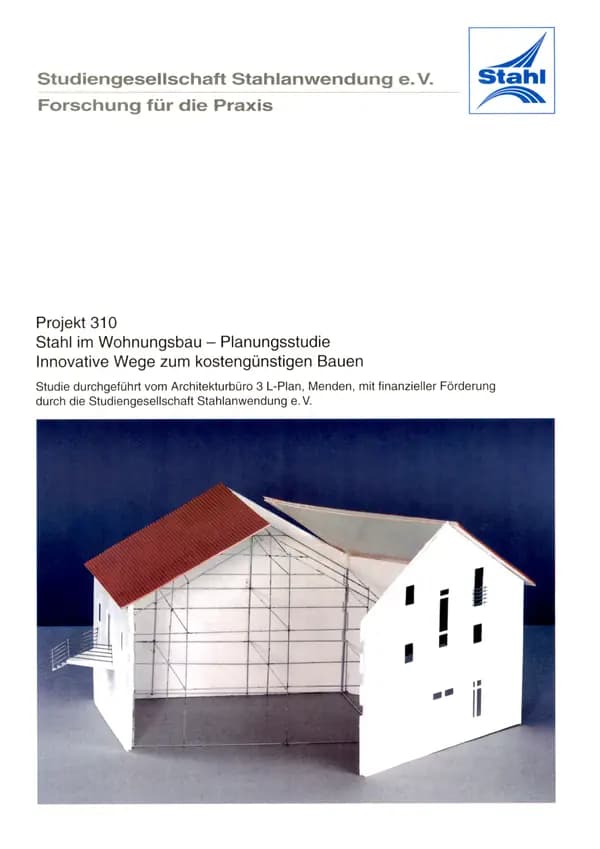
FOSTAP 310 - Steel in residential construction - Planning study Innovative ways to cost-effective construction
P 307: Structuring and classification of steel sheet multilayer composites Following the construction of a detached house using a steel frame construction in 1992, the research centre had its first findings on this cost-effective and high-quality lightweight solid construction method. With a total wall thickness of 29 cm, a k-value of 0.29 W/sqm x K was achieved. The aim of this research project was to develop a constructive system solution that can be adapted to individual ground plan and design requirements and also offers the possibility of increasing the proportion of in-house labour in the extension and enabling it in the area of primary construction. The use of steel in residential construction can reduce construction time by around 50 % and costs by up to 30 % without compromising on quality. The existing cost pressure, which is reflected in a doubling of construction costs since 1970, and the shortage of building land are hindering the construction of detached and semi-detached houses. Saving costs is therefore essential and is desired by those wishing to build. Possible personal contributions today are mainly limited to the finishing trades, which only account for approx. 30 % of the construction costs. The much larger and more cost-intensive area of shell construction, which accounts for around 70 %, has so far been excluded from cost-cutting in-house labour. Steel can make an important contribution to reducing costs here in particular. Its weight advantages lead to easier assembly and make favourable use of the volume of the supporting structure in relation to the load to be carried. The load-bearing steel construction enables a multi-layered, but occasionally thin façade. As the new thermal insulation regulations require increasingly thicker walls, not only are the material costs higher, but a larger plot of land is also required for the same distance to the neighbouring boundary. In relation to these conventional buildings, the research centre has calculated a k-value of 0.20 W/sqm x K with the results of this study and thus remains in the low-energy house class, but with reduced costs. STUDIENGESELLSCHAFT STAHLANWENDUNG e.V. Publication: 1996 Authors: Dipl.-Ing. V. Lenze, Dipl.-Ing. K. Th. Luig
available anytime
View details →€30.00
excl. VAT
 FOSTA
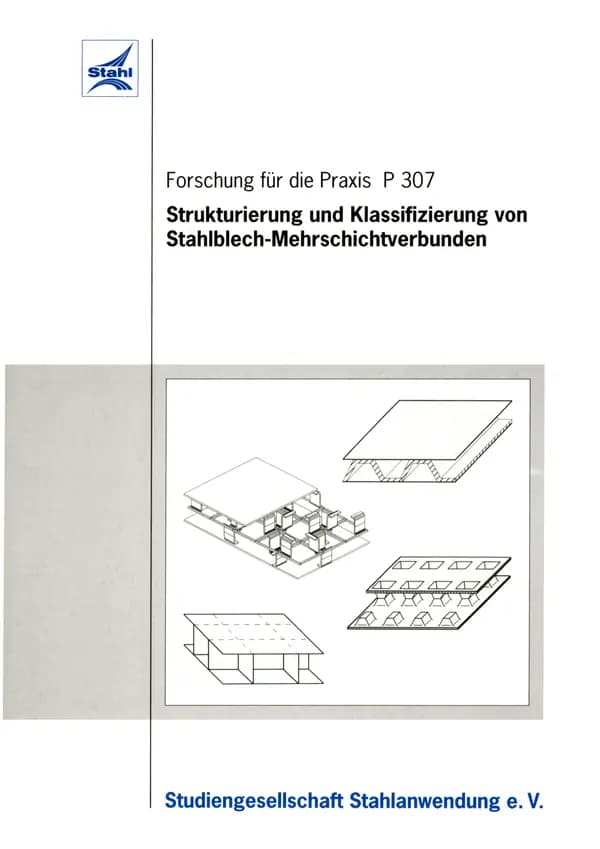
FOSTAP 307 - Structuring and classification of steel sheet multilayer composites
Recent developments have shown that the range of applications for steel can be significantly increased by using innovative, application-orientated pre-products. Steel sheet multi-layer composites (StMV) belong to such an innovative group of pre-products which, with adjustable direction-dependent properties, are primarily tailored to the requirements of functionally integrative lightweight construction. The present work examines the extent to which application-orientated steel sheet multi-layer composites in conjunction with adapted joining processes can open up an extended application potential for steel as a material for innovative lightweight construction and novel lightweight construction systems. The basic idea of producing an application-orientated semi-finished product system from sheet steel - sometimes in combination with other materials - has led to the development of a wide range of different sheet steel multi-layer composites. What they all have in common is their use as large-area load-bearing structures, in which the multi-layer composite leads to a lower component weight and higher rigidity. There are now a number of processes for the manufacture of near-net-shape and, in some cases, post-processing-free complex products. This study describes the wide-ranging properties of these innovative preliminary products and develops a system for categorising the products currently under development or already on the market that are offered using steel. These are presented in detail and their application potential is discussed. An overview is given of the material data and joining possibilities known to date and the optimisation possibilities that still exist are discussed. The study provides experts in vehicle, machine and plant construction in particular with information on the innovation potential of these new preliminary products with regard to lightweight construction with steel. STUDIENGESELLSCHAFT STAHLANWENDUNG e.V. Publication: 1996 Authors: Prof. Dr.-Ing. habil. W. Hufenbach, Dipl.-Ing. F. Adam
available anytime
View details →€20.00
excl. VAT
 FOSTA
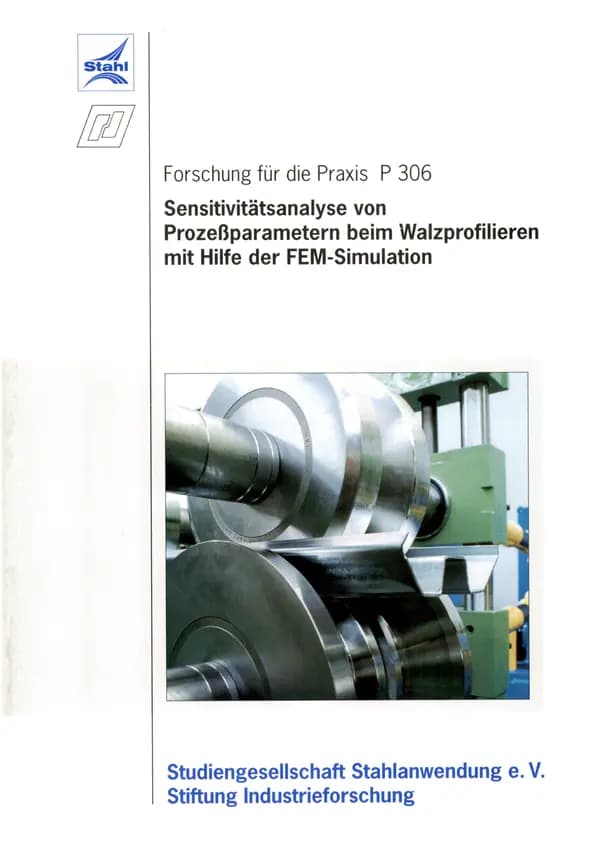
FOSTAP 306 - Sensitivity analysis of process parameters in roll forming with the aid of FEM simulation
P 306: Sensitivity analysis of process parameters in roll forming with the aid of FEM simulation In roll forming, the planning of the forming stage sequence as well as the tool design is still essentially based on empirically acquired employee knowledge. One reason for this is the medium-sized structure of many roll forming companies, which shy away from the cost-intensive preliminary work for a simulation workstation. Another reason is the sequence of complicated three-dimensional stress and deformation states with a large number of influencing parameters which make it difficult to create a suitable calculation model. The aim of this research project was to improve the software and reduce the effort required for practical application. Based on an earlier research project, the existing calculation model for the roll forming process was further developed. The main aim here was to shorten the computing time and optimise the simulation options. At the centre of the investigations was a sensitivity analysis of essential process parameters from the influences of the tool system and the material parameters. The results were transferred to the calculation model. By using shell elements to represent a sheet metal segment and by modifying the tool movement, the required calculation time could be reduced to a quarter of the original time. The sensitivity analysis allowed a significant addition to the previously incomplete process knowledge and the adapted consideration of the influence of different parameters for influencing the forming result. In practice, the research work will lead to an improvement in the preliminary design of the tools and the sequence of stages. In conjunction with the reduction in the number of optimisation stages, this will result in a significant shortening of the preparation phase for actual production. It is to be expected that smaller and medium-sized companies in particular will benefit from this simplified numerical process simulation and its introduction into operational practice. STUDIENGESELLSCHAFT STAHLANWENDUNG e.V. Publication: 1999 Authors: Dipl.-Ing. A. Istrate, Prof. Dr.-Ing. em. D. Schmoeckel
available anytime
View details →€30.00
excl. VAT
 FOSTA
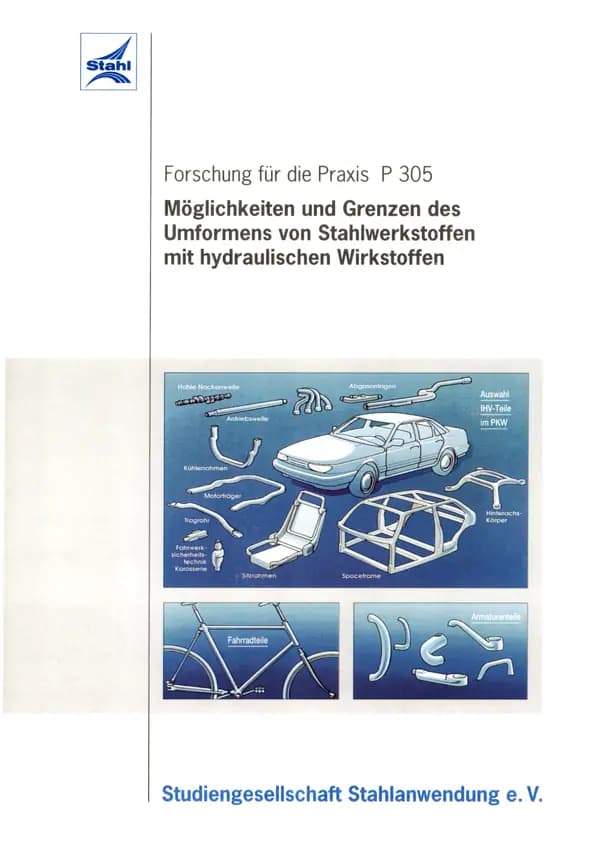
FOSTAP 305 - Possibilities and limits of forming steel materials with hydraulic active media
P 305: Possibilities and limits of forming steel materials with hydraulic active media The forming of steel with hydraulic moulding media is attracting increasing interest from industrial users. The aim of this thesis was to compile, systematise and evaluate the wide range of information on process variants, material suitability, applicability to component shapes, achievable component properties and cost-effectiveness to produce a comprehensive status report. The literature references and patent applications known to date in Germany were compiled and analysed as part of a diploma thesis. In addition, information was collected and questions discussed in numerous interviews with experts from universities, press manufacturers and the steel processing and user industry. Hydroforming is currently mainly used for shaping tubular semi-finished products. The plant technology available in Germany and the know-how, which is the most advanced in Germany compared to other industrialised countries, have proven themselves in production. In contrast, there is still a greater need for research into the forming of flat sheet metal blanks. Among the various types of steel, those with high ductility, i.e. soft ferritic carbon steels and austenitic stainless steels, have proven to be particularly easy to form. The limits of hydroforming technology for the manufacture of innovative products are not yet foreseeable. Increased use of hydroforming technology can be expected, particularly in the field of lightweight construction with steel, due to optimised component geometries or geometries that were previously impossible to produce. IHU technology offers great potential for innovation in the forming of conventional semi-finished products (tubes and flat sheet metal) and also for semi-finished products in which different dimensions and properties are combined in the form of tailored tubes, tailored blanks or even multi-layer materials. STUDIENGESELLSCHAFT STAHLANWENDUNG e.V. Publication: 1996 Authors: Dipl.-Ing. S. Lichtenberg
available anytime
View details →€20.00
excl. VAT