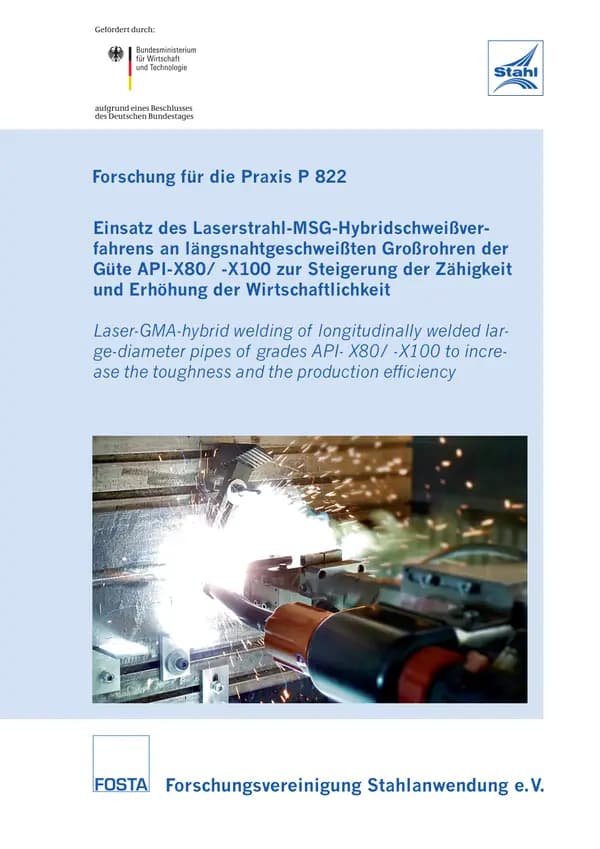
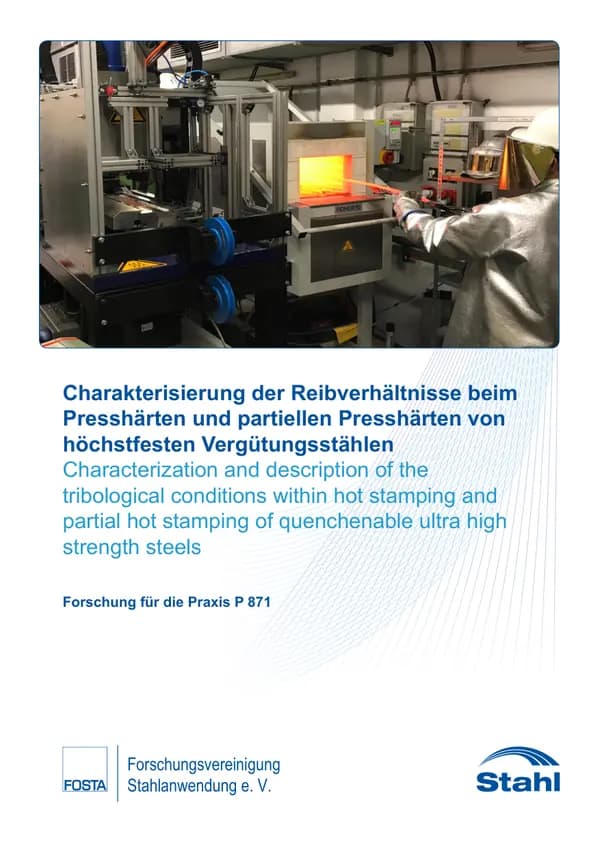
P 871 - Characterisation of friction conditions during press hardening and partial press hardening of ultra-high-strength heat-treatable steels
P 871 - Characterisation of the friction conditions during press hardening and partial press hardening of high-strength heat-treatable steels In the course of the approach to lightweight construction with high-strength …
Content
- Authors
- M. Merklein, M. Rosenschon, P. Schwingenschlögl
- Publication
- 2018
P 871 - Characterisation of the friction conditions during press hardening and partial press hardening of high-strength heat-treatable steels In the course of the approach to lightweight construction with high-strength and ultra-high-strength steel materials, press hardening has established itself as a standard process for the production of safety-relevant structural components. The correct process design of press hardening processes with the aid of finite element simulation (FE) requires precise knowledge of the prevailing tribological conditions in the forming process. As part of this research project, a test facility was developed and set up to determine the friction conditions under press hardening conditions.
Show full description
The aim of the investigations was to comprehensively characterise the friction conditions for direct and partial press hardening. The results were integrated into commercial FE software using a time- and location-dependent numerical friction model. For this purpose, a hot strip drawing machine was designed, constructed and put into operation during the project period. A heated carriage, which is used to transport the heated sheet metal, ensures that the friction conditions can be determined under near-process conditions by measuring the drawing force on the sheet metal strip and the normal force on the friction jaw. Strip drawing tests were used to determine friction coefficients as a function of the process parameters tool and workpiece temperature, surface pressure and relative speed. It was shown that an increase in these process parameters for AlSi-coated sheets leads to an overall reduction in the coefficient of friction. Increasing surface pressures and relative speeds also result in reduced friction for sheets with a Zn coating. With increasing temperatures, however, increased friction was measured. Based on the experimental results, a friction model was developed and implemented in the FE software Auto-Form. The developed friction model was then verified in a first step using a cup tensile geometry in a laboratory test. Following the project, the model is to be evaluated by the industrial partners using the geometry of a series component. Process simulation in hot sheet metal forming, especially in partial press hardening, will be significantly improved by the extended friction model. This can speed up the extremely costly and time-consuming process design, including tooling, especially for SMEs. In addition, steel manufacturers can make targeted further development of materials and coatings with regard to tribological properties. The research project was carried out at the Chair of Production Technology at Friedrich-Alexander-Universität Erlangen-Nürnberg with technical support and financial backing from the Forschungsvereinigung Stahlanwendung e. V., Düsseldorf.
Zum Zoomen hovern
€20.00excl. VAT
Payment by card (Stripe) or invoice (DE, AT, CH). Download link by email: automatically after ordering by card, after order approval for invoice (valid for 30 days). Terms
P 871 - Characterisation of friction conditions during press hardening and partial press hardening of ultra-high-strength heat-treatable steels—
€20.00