 FOSTA
FOSTAP 1530 - Extension of the process limits in GMAW hot-wire welding by adapting the material and energy input by means of upstream hot-wire preheating
P 1530 - Extension of the process limits in GMAW hot-wire welding by adapting the material and energy input by means of upstream hot-wire preheating Despite the widespread use of GMAW (gas metal arc) welding processes, these processes have the inherent disadvantage of coupling material and energy input. In mechanised applications, an arc filler wire (hot wire) can be used to compensate for this disadvantage. However, the hot wire current causes the magnetic blowing effect, which in turn limits the process window and variability of the process. The aim of this research project is therefore to develop a MSG hot wire process with upstream ohmic filler wire preheating (between two current nozzles) for joint welding, build-up welding and additive manufacturing. In addition to increasing the deposition rate, the aim is to achieve decoupling and targeted control of the material and energy input depending on the application. As part of the research project, the MSG hot wire process with preheated hot wire was analysed in detail both in terms of its process characteristics and its potential for various welding tasks. It was shown that the hot wire feed has a significant influence on the process, with an approach angle of 50° leading to a more stable and homogeneous seam formation. The MSG process itself is primarily determined by the electrical heating and is not influenced by the preheated hot wire, whereby optimisation of the wire feed and gas purging can further increase the process stability. The process shows excellent suitability for single-layer welding of 8 mm thick mild steel sheets and also has great potential for welding thicker sheets (up to 20 mm). In terms of additive manufacturing and build-up welding, the process enables high productivity and good mixing, although the path planning must be adapted accordingly. A steep wire feed angle (65°) leads to a strong interaction between the filler material and MSG wire, which requires short arcs. In addition, the preheating length should not exceed 30 mm to ensure a stable process. Overall, the GMAW hot wire process shows great potential for various welding tasks and application scenarios, especially in the field of joint welding and additive manufacturing, whereby the adjustment of the process parameters makes a decisive contribution to optimisation. The objective of the research project was achieved. Publication: March 2025 Authors: T. Ungethüm, T. Dilger, P. Schilling, E. Spaniol, M. Schäfer, U. Füssel, H. Schmale
available anytime
View details →€30.00
excl. VAT
 FOSTA
FOSTAP 1559 - Integrated planning tool for cost and 3D structural planning for offshore wind farms for H2 generation
P 1559 - Integrated planning tool for cost and 3D structural planning for offshore wind farms for H2 generation Due to climate change, there is an acute need for action to switch from fossil fuels to renewable energy sources. Offshore wind farms offer the opportunity to provide large quantities of electricity from renewable energy sources. However, there are periodic fluctuations in electricity production due to the dynamic environmental conditions. In order to enable intermediate storage of the converted energy, it makes sense to produce hydrogen from offshore wind energy. The process used for this is known as electrolysis. This makes it possible to decouple the production and consumption of green energy over time. The problem To date, offshore wind farms with integrated hydrogen infrastructure have only had a low technology readiness level (TRL) due to their novelty. There is a lack of experience in design, planning and project realisation. Flexible planning procedures are required, as the range of configuration options is broad. The various types of electrolysis and transport technologies, with their respective strengths and weaknesses, must be considered and evaluated for the specific application. In addition, the system costs and energy production depend on the environmental parameters, which can vary for each scenario. These influencing variables also have an impact on each other, which increases the complexity of planning the overall system and means that an assessment of feasibility based on economic indicators can currently only be realised with a great deal of effort. Objective and solution The aim of this research project was therefore to create a planning methodology and develop a tool for the 3D structural and cost planning of offshore wind farms with integrated hydrogen infrastructure. In addition, a system dynamics model was created to visualise the relationships between influencing factors. Various system structure options were considered in the project and an application scenario was defined. With the help of configurable parameters (technical, oceanographic, etc.), key figures for the economic efficiency analysis could be created, whereby a scenario-analytical approach was implemented. Geographic information system data (GIS data) was integrated into the system as the data basis for the environmental parameters in order to incorporate environmental parameters and site-specific factors into the planning process (distance to the coast, water depth, etc.). These parameters were used to calculate the hydrogen produced and offset it against the system costs. Benefits The planning tool developed supports companies in the offshore wind industry in the holistic planning and cost assessment of offshore wind farms with a hydrogen infrastructure. Individual scenarios and system designs can be visualised and economically evaluated using an interactive environment. It thus reduces the planning effort for these large-scale projects and supports decision-making in the planning phase. The objective of the research project was achieved. Publication: February 2025 Authors: M. Hayduk, O. Kühn
available anytime
View details →€30.00
excl. VAT
 FOSTA
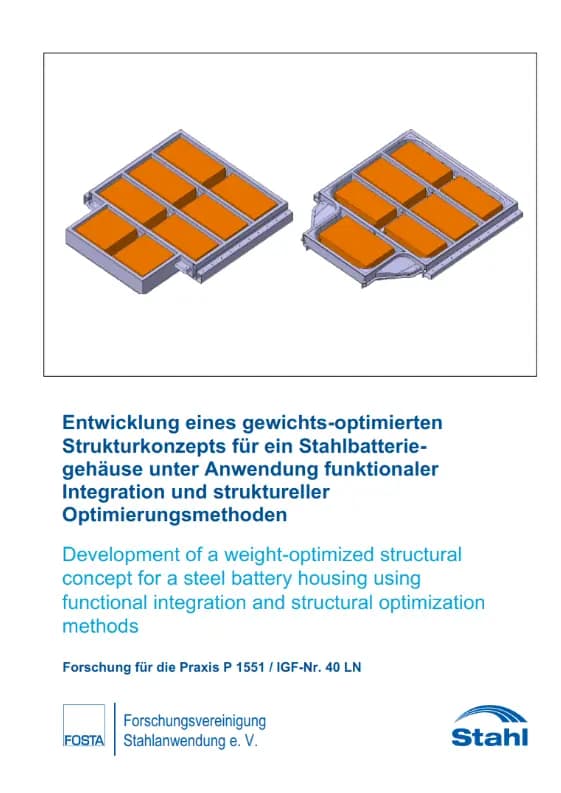
FOSTAP 1551 - Development of a weight-optimised structural concept for a steel battery housing using functional integration and structural optimisation methods
P 1551 - Development of a weight-optimised structural concept for a steel battery housing using functional integration and structural optimisation methods Due to current ecological, economic and social changes, a rethink is currently taking place in the development and design of future vehicles. Many manufacturers are pursuing the development of battery electric vehicles due to one or more of these factors. In today's electric vehicles, the energy storage system accounts for a large proportion of the total weight. This component consists mainly of lithium-ion cells, which are combined into modules and then inserted into a housing structure. The requirements for this structure are diverse and sometimes conflicting. One example of this is the high requirements in terms of crash safety with minimal installation space. It is therefore not uncommon for compromises to have to be found during development, which often result in an increased weight of the housing. In this sub-project, a weight-optimised concept for a steel battery housing was developed, which takes into account the requirements from the overall project with regard to corrosion protection, tightness and joining technology. The concept was considered at system and overall vehicle level in order to take functional requirements into account during development and achieve a high degree of functional integration. The lightweight construction objective was also pursued through the use of virtual optimisation methods. In addition, a sustainability assessment was carried out in the form of a carbon footprint analysis with a comparative reference in order to ecologically assess the battery housing developed. Finally, based on the findings of this sub-project, a sample battery housing was assembled, on which the basic manufacturability and tightness properties were analysed. The objective of the research project was achieved. Publication: January 2025 Authors: S. Spohr, Ch. Krüger, M. Korten, L. Eckstein
available anytime
View details →€30.00
excl. VAT
 FOSTA
FOSTAP 1547 - Crack initiation and propagation properties in pipeline steels for the transport of hydrogen-containing mixtures
P 1547 - Crack initiation and propagation properties in pipeline steels for the transport of hydrogen-containing mixtures Within the scope of this project, experimental investigations were carried out to quantify the influence of hydrogen on the mechanical properties of the pipeline steel X70. Electrochemical loading by electrolysis was used as the method for hydrogen loading, as this enables precise control of the hydrogen concentration by varying the loading duration. The hydrogen concentration was quantified using thermal desorption spectroscopy (TDS), whereby a correlation was established between loading time and hydrogen content according to an exponential saturation function. In the ex-situ tensile tests, samples were mechanically tested with different hydrogen concentrations after they had been galvanised to prevent hydrogen fusion. Despite the high data scatter, trends could be identified: Yield strength and tensile strength initially showed a decrease up to a hydrogen concentration of 0.9 ppm and then a slight recovery at higher concentrations (1.44 ppm). This behaviour was attributed to competing mechanisms such as the HELP mechanism and a pinning effect. The data obtained were used to calibrate a material model that allows the simulation of more complex stress states. Additional in-situ tensile tests, in which hydrogen loading and mechanical loading were carried out simultaneously, showed greater embrittlement and significantly reduced elongation at break. This is explained by continuous hydrogen supply and hydrogen-induced mechanisms (HELP, HEDE, AIDE). Methodological challenges of the in-situ tests, especially regarding stress multiaxiality and loading time, were identified and discussed. In summary, it was shown that hydrogen embrittlement is less pronounced in the case of rapid deformations, such as those occurring before the crack tip of the bursting pipeline, due to the short diffusion times of the hydrogen. Slow deformations, on the other hand, lead to a stronger local hydrogen accumulation and thus to more pronounced embrittlement. These results provide a valuable basis for the safety assessment and modelling of hydrogen-carrying pipelines. Furthermore, numerical modelling approaches could be developed and optimised. The influence of hydrogen could be taken into account when describing the plastic deformation and ductile failure behaviour of pipeline steels. The modelling approach was used in conjunction with a diffusion model both on a laboratory scale and at component level. Various aspects that influence the ductile crack propagation and arrest behaviour could be investigated. These include the influence of the deformation history from the UOE forming process for the production of longitudinally welded large-diameter pipes, the influence of the geomechanical behaviour of the soil backfill in onshore pipelines and the decompression behaviour of natural gas-hydrogen mixtures in a wide range of applications. In the latter case, a positive influence on the decompression behaviour could be demonstrated even with moderate volume fractions of hydrogen in natural gas mixtures. This influence can partially compensate for a reduction in the toughness properties of the steel. The findings were used to optimise the FSI model for mapping the RDF scenario. This served as the basis for the development of a surrogate model. Artificial neural networks (ANN) were trained on the basis of numerically generated data from the RDF model. With these, it was possible to establish a correlation between the operating conditions of pipelines and crack propagation and arrest behaviour. This makes it possible to predict the occurrence of crack arrest and the corresponding crack arrest length for a given transport scenario. The goal of the research project was achieved. Publication: February 2025 Authors: Dr.-Ing. S. Münstermann, Prof. Dr.-Ing. A. Nonn
available anytime
View details →€30.00
excl. VAT
 FOSTA
FOSTAP 1521 - Integral sheet pile abutments of modular composite bridges for a time-efficient construction process
P 1521 - Integral sheet pile abutments of modular composite bridges for a time-efficient construction process This report summarises investigations to derive a design concept for an integral frame corner for composite bridges with sheet pile abutments. The composite construction method can be used to produce efficient and economical cross-sections that are capable of covering a large proportion of the spans of today's bridges. The integral construction method, which does not require joints or bearings, leads to lower maintenance costs and reduced external costs of the structure over its life cycle. The use of sheet pile abutments, on the other hand, can significantly reduce the construction costs of the structure. To enable application in the construction industry, a design concept for an integral frame corner with sheet pile abutments is being developed in the FOSTA research project P1521. In order to define the scope of application of the design concept, the existing German infrastructure is first analysed. There is a significant need for refurbishment throughout the entire bridge network. Comprehensive statistics are primarily available for the federal trunk road network, where approx. 80% of all bridges have a span of less than 50 m, which can be covered by the planned concept. In contrast, significantly more individual structures are owned by local authorities and municipalities, and here too short and medium spans dominate. After presenting the boundary conditions of the design concept, the report deals with the implementation and evaluation of various test series of the frame corner. The evaluations of these tests provide insights into the load-bearing behaviour of the cross-sections used and the failure of the respective test specimens. The frame corner is separated into an upper and lower part for a targeted investigation. The results of these small-part tests provide high load-bearing capacities with absorbable moments of 1200 kNm (upper part) and 500 kNm (lower part) with acting loads of 1350 kN (upper part) and 400 kN (lower part). With the help of subsequent numerical calculations, the test results can be further analysed and load paths clearly identified. The knowledge gained from this is used in the subsequent derivation of a design concept. The numerical investigations also identified further influencing parameters that can further increase the performance of the frame corner. In a large-scale test, the entire frame corner consisting of the upper and lower parts is tested. The results of this test are consistent with the results of the previous series of tests; in particular, a higher load on the lower composite dowel bar can be demonstrated. With the help of these results, a design concept for integral frame corners with sheet pile abutments is developed in the final step and presented using a design example of a composite bridge with a span of 45 metres. Publication: April 2024 Authors: Prof. Dr.-Ing. M. Feldmann, K. Wolters, N. Rittich, Dr.-Ing. St. Ivanov, Dr.-Ing. J. Rajasingam
available anytime
View details →€30.00
excl. VAT
 FOSTA
FOSTAP 1561 - Modelling and evaluation of logistics chains for hydrogen transport for the steel industry with special consideration of transport-related energy losses
P 1561 - Modelling and evaluation of logistics chains for hydrogen transport for the steel industry with special consideration of transport-related energy losses Large industrial consumers from pig iron production or the chemical industry can eliminate a considerable proportion of their CO2 emissions by substituting fossil fuels with hydrogen. The conversion of steelworks' existing production processes from the blast furnace route to direct reduction requires large quantities of green hydrogen. According to the state of the art, large-scale hydrogen supply represents an unknown field for all parties involved in this project (producer, supplier, etc.). In addition, various ramp-up scenarios create further uncertainties on both the supply and consumer side. In this research project, logistical considerations of the transport chains, carried out by the Fraunhofer CML, and for a realistic mapping of the scenarios, implementations of loss variables are necessary, which have a significant influence on logistics in view of the volatile hydrogen and the high transport volumes. The Fraunhofer IGP is therefore developing simulation models of the various loss mechanisms on the basis of the data and applicability. The transport of hydrogen in quantities required by pig iron production or the chemical industry must be covered by pipelines. For the capacitive design, a tool was developed in the project that can be used for the dimensioning of pipelines. It takes material properties, economic and construction-specific factors into account when designing pipelines. Furthermore, it can be assumed that the large H2 consumers will go through a ramp-up phase. During these ramp-up phases, conventional modes of transport such as lorries, goods trains or inland waterway vessels can be used. In order to evaluate their performance against the background of the specific energy and cargo losses, a model was developed for the simulation of logistics concepts for the supply of H2 consumers. A simulation of a use case showed that energy and cargo losses play a role in the economic choice of the means of transport, especially when transporting LH2. The development of loss values is based on the underlying data. If the researched loss data set is deemed sufficient for the respective transport chain element, this is preferable to modelling based on it in order to keep simulation depths within reasonable limits. If there is a lack of data on absolute losses, a numerical or analytical model should be developed as an alternative. If there is a major lack of data for a transport chain element, a loss assumption is made. The consideration of global influencing parameters applies to all three solution approaches. The first holistic logistics simulation models were developed, verified and validated by introducing adequate loss variables in the form of a programme interface. Further use cases of SMEs can be simulated. The objective of the research project was achieved. Publication: February 2025 Authors: P. Zimmerman, R. Fiedler, C. Jahn, L. Sattler, S. Schmidt, W. Flügge
available anytime
View details →€30.00
excl. VAT
 FOSTA
FOSTAP 1560 - Influence of corrosive media on the fatigue strength of offshore wind turbines
P 1560 - Influence of corrosive media on the fatigue strength of offshore wind turbines Offshore steel structures are sometimes exposed to harsh environmental conditions. At the same time, they are at risk of fatigue due to cyclic loads from wind, waves and operational or traffic loads. Both the steel structure, which is at risk of fatigue, and the corrosion protection, which degrades over the years, have a limited service life. When the corrosion protection has reached the end of its service life and fails, the steel is exposed to free corrosion. In order to continue operating the structures in this condition, it is necessary to investigate the influence of corrosion on fatigue strength. For this purpose, new methods must be developed with which the actual condition of corroded components of the load-bearing structures can be recorded and integrated into predictions for a (remaining) service life. Steel structures generally have numerous welded joints. These behave differently to the base material due to the existing stress concentrations caused by the weld seam geometry and the residual stresses from the welding process. Fatigue tests were therefore carried out on corroded base material, fillet weld and butt weld samples. In addition, 3D scans and residual stress measurements were carried out. The fatigue tests were then recalculated using local fatigue concepts, taking into account the real specimen geometry from the 3D scans and the measured residual stresses. It was shown that the notch stresses have a major influence on the prediction of the service life. In addition, it was found that the residual stresses play an important role and must be taken into account when assessing the remaining service life of corroded steel components. By applying local methods, the scatter in the Wöhler curves could be minimised, thus increasing reliability. It was shown for welded specimens that it is possible to take into account the real condition of corroded components in the calculation of fatigue strength. Using the replica technique, in which impressions of corroded components are created as part of structural inspections, it was shown that the results from the previous investigations based on notch stresses can be transferred to real structures. Further investigations with a total of 12 months of corrosive exposure have shown that the fatigue strength does not fall continuously and equally for all sample geometries. The reduction in fatigue strength for base material samples, for example, is greater than for welded samples, which can be attributed to a lower notch effect in the initial state prior to corrosive exposure. It has also been shown that there is an equalisation effect over a long corrosion period, which leads to different specimen geometries with different fatigue strengths in the uncorroded state having similar fatigue strengths after exposure to corrosion. This is due to the different interaction of corrosion and weld notches. Sharp initial notches become milder due to corrosion and milder initial notches become sharper due to corrosion. The aim of the research project was achieved. Publication: February 2025 Authors: S. Shojai, P. Schaumann, E. Ghafoori, Ch. Woitzik, R. and F. von Bock and Polach
available anytime
View details →€30.00
excl. VAT
 FOSTA
FOSTAP 1537 - Wood-steel hybrid construction methods using the example of bending-stressed load-bearing elements
P 1537 - Wood-steel hybrid construction methods using the example of bending-stressed load-bearing elements The construction industry is the largest CO2 emitter in Germany. The sustainable reorganisation of the construction industry is therefore crucial for a successful fight against climate change. As a renewable building material, wood can help to replace conventional CO2-intensive building materials. However, building with wood also has its limitations. For example, the necessary cross-sections become very large when large spans are required. This is where the completed research project "Wood-steel hybrid construction methods using the example of bending-stressed load-bearing elements - HoStaBau" comes in. By favourably combining the materials steel and timber, hybrid cross-sections are to be constructed that significantly reduce the required cross-sectional dimensions. The materials wood and steel can optimally complement each other in hybrid cross-sections and compensate for the weaknesses of the other material. The research project is divided into eight work packages (WPs). Firstly, analytical and numerical parameter studies show that the materials can be combined very well with different geometry combinations. Subsequently, composite methods are analysed using a total of 106 test specimens. It is shown that the assumption of a full bond can be confirmed by the adhesive bonding of the materials. The durability of the bond is tested with endurance tests (NKL 1 and NKL 2), moisture cycling, high temperature and ageing tests. The adhesive bond can be categorised as uncritical in these areas. In 4-point bending tests, the bending load-bearing behaviour of 30 hybrid beams with different geometry and material combinations with a span of 2.4 m is examined. The load-bearing capacity can be increased by up to 120 % and the bending stiffness by up to 250 % compared to timber reference beams. In addition to the bending load-bearing behaviour, the shear load-bearing behaviour is also being investigated. For this purpose, 18 hybrid beams with different material and geometry combinations and a span of 0.74 m are tested in 3-point bending tests. The shear strength can be increased by up to 440% compared to timber reference beams. At the end of the research project, a standardised design concept for the hybrid construction method will be developed. Based on the test results, the full bond between the materials can be confirmed so that an easy-to-use analytical design method can be created. This enables a rapid transfer into practice. Small and medium-sized enterprises (SMEs) in particular benefit from the research results and gain a knowledge advantage. The goal of the research project was achieved. Publication: April 2024 Authors: P. Haase, S. Aurand, J. Boretzki, Dr.-Ing. M. Albiez, Dr.ir. C. Sandhaas, Prof. Dr.-Ing. P. Dietsch, prof. Dr.-Ing. T. Ummenhofer
available anytime
View details →€30.00
excl. VAT
 FOSTA
FOSTAP 1529 - Process comparison for shaping metallic bipolar plates - hollow embossing vs. hollow embossing rollers
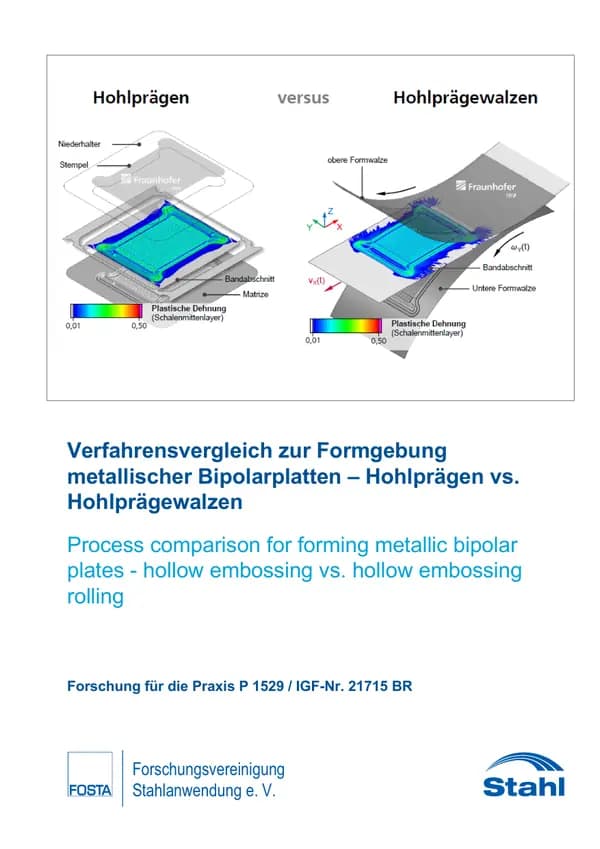
P 1529 - Process comparison for shaping metallic bipolar plates - hollow embossing vs. hollow embossing rollers As part of the research project, fundamental findings on the interactions and limits of hollow embossing rolling of metallic bipolar plates (BPP) made of stainless steel foil were developed. This process, which has been little researched to date, offers the possibility of achieving higher production rates than the hollow embossing and sheet metal pressure forming processes currently in use. The limits of the reproducibility of geometric elements of BPP were determined for the rolling process, the actual achievable production rates were estimated and compared with the results from parallel investigations into hollow embossing. Hollow embossing rolling was initially analysed using FE simulation on the basis of previously defined requirements for a demonstrator geometry, the plant and tool technology. The results were implemented in tool design and process control on the test stand. The simulation model was validated on the basis of the test results and further process improvements were achieved. By analysing process data and measurement results, it was possible to determine which geometric elements can be produced and which cycle times can be realised while maintaining defined tolerances. The results achieved for hollow embossing and hollow embossing rolling are presented as a key result. The focus here is on imageability, image accuracy and production speed. The project results enable SME-strong sectors (suppliers, plant and tool manufacturers) to access the growing market for metallic BPP. Corresponding products and services can be tailored more precisely to the requirements of hollow embossing and hollow embossing rolling. In particular, by focussing the investigations on the determination of process parameters and boundary conditions to be complied with in hollow embossing rolling, the entry into the BPP market was decisively prepared and opened up Publication: March 2024 Authors: Prof. Dr.-Ing. M. Dix, M.Sc. F. Reuther, Dipl.-Ing. S. Porstmann, Dipl.-Ing. (BA) St. Polster, M.Sc. S. Melzer
available anytime
View details →€30.00
excl. VAT
 FOSTA
FOSTAP 1520 - Method development for the simulation of viscous fingering in bonded joints of steel-intensive mixed structures
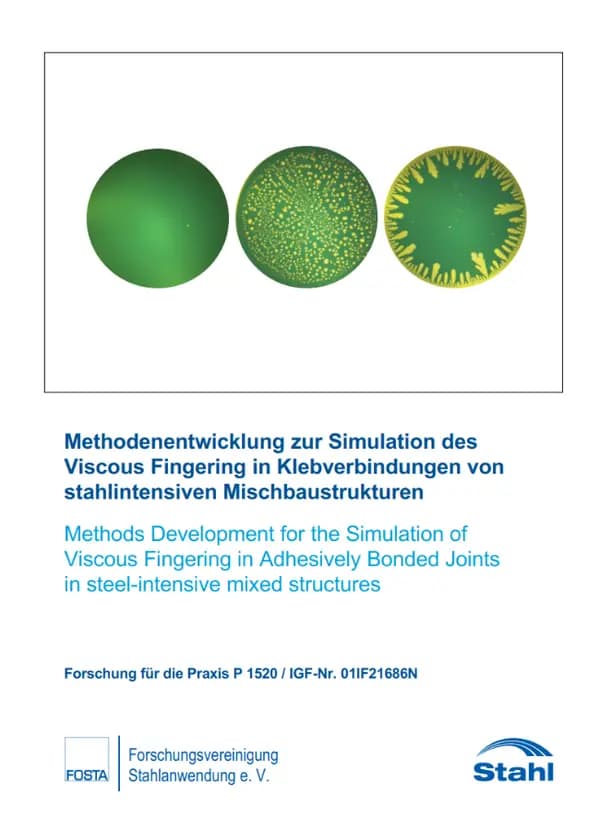
P 1520 - Method development for the simulation of viscous fingering in bonded joints of steel-intensive mixed structures Adhesive bonding technology is becoming increasingly important in a wide range of industrial applications due to its potential for joining dissimilar materials. One common application is the adhesive bonding of steel in combination with aluminium. During the heat curing of the adhesives, the adhesive gap between the components increases due to the different thermal expansion coefficients of the materials. This gap widening occurs predominantly while the adhesive is still liquid and thus leads to a sometimes significant reduction in the original bonded area. The resulting bonded surface has a meandering structure (fingers), the surface area of which decreases as the gap widens. This structure is "frozen" by the subsequent curing process. Due to the reduced bonding surface, a significantly increased stress build-up and associated damage to the cured adhesive is to be expected. The result is a significantly reduced load-bearing capacity and ageing resistance of the bonded joints. The aim of the project is to develop a method for quantifying the bonding surface actually present in the product in order to improve manufacturing processes and the design for the subsequent operational load case. Both experimental investigations and methods of finite element simulation (FEM) and computational fluid dynamics (CFD) were used for this purpose. The phenomenon known as "viscous fingering" was investigated on various specimens, including Lifting-Hele-Shaw cell, LWF-KS2 specimen, head tension specimen and bridge specimen (with buckling behaviour). In the experimental investigations, the dependence of bond area reduction on the relative displacement of the joining partners could be determined, which can be described by a power approach. This relationship was then implemented in an FEM model in order to carry out strength simulations of joints damaged by viscous fingering. In addition, the reduction of the bonded area due to relative displacements was analysed using CFD in order to reduce the dependence on experiments. The simulated bond area reductions show deviations from the experiments, but these can be compensated for using a correction function. The aim of the research project was achieved. Publication: 2024 Authors: G. Meschut, D. Teutenberg, M. Al Trjman, J. Riese, E. Kenig, A. Salten
available anytime
View details →€30.00
excl. VAT
 FOSTA
FOSTAP 1513 - Method development for the design of bonded joints made of high-strength steel under consideration of operationally relevant stresses in mechanical and plant engineering
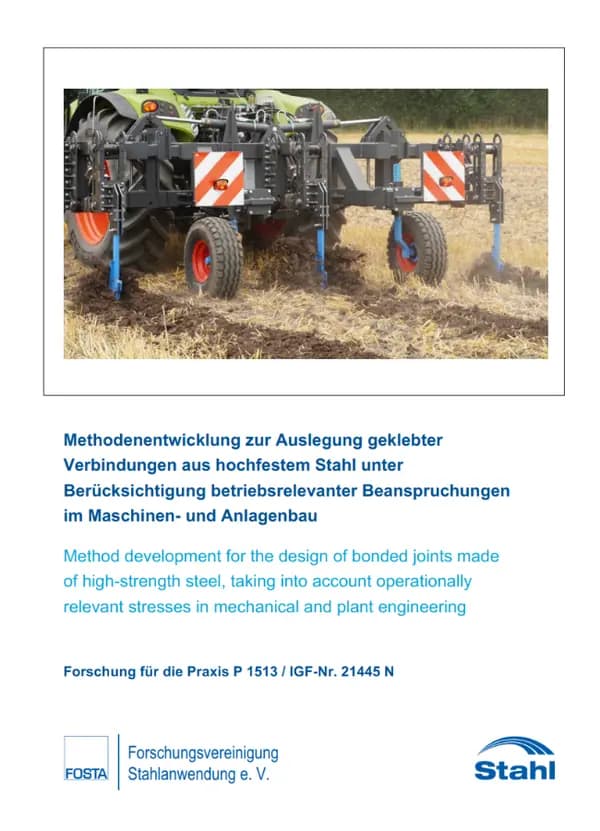
P 1513 - Method development for the design of bonded joints made of high-strength steel under consideration of operationally relevant stresses in mechanical and plant engineering Up to now, adhesive bonding technology has only been used to a limited extent in the construction of agricultural machinery and plant engineering, particularly for joining thicker sheet metal (3 - 10 mm), although it is already an established joining method in other areas of application. The reliability of these constructions, especially in the field of vibration machine construction, is largely determined by the safety against fatigue fractures. A major obstacle to their use in the industries mentioned is the lack of experience in the design of bonded joints and in the use of adhesive bonding technology. A lack of knowledge about, for example, resistance to agricultural media also inhibits the use of adhesive bonding technology. The research project on which this report is based investigated the extent to which the load-bearing capacity of joints made of high-strength steels in thick-walled constructions (5 mm) in agricultural machinery and plant engineering can be efficiently utilised under vibration loads by means of structural bonding. The aim was to develop an SME-relevant design method based on the FKM guideline. To this end, various factors influencing the quasi-static and dynamic strength of the bonded joints were analysed. These served as the basis for the development of an analytical design method, which could be successfully verified in the thick-walled constructions and served the development of SME-relevant design and strength guidelines. The objective of the research project was achieved. Publication: 2024 Authors: J. Göddecke, G. Meschut, T. Göhrs, M. Große Gehling
available anytime
View details →€30.00
excl. VAT
 FOSTA
FOSTAP 1507 - Efficient verification concepts for mixed joints in steel construction
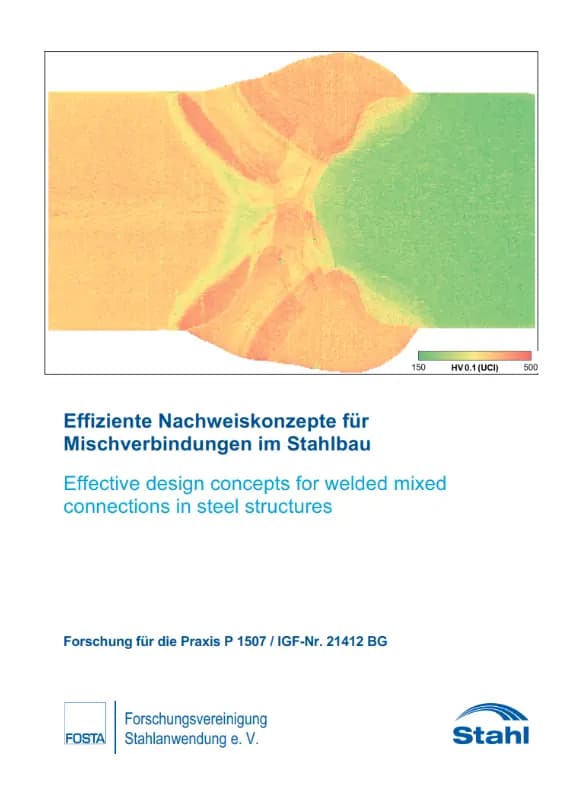
P 1507 - Efficient verification concepts for mixed joints in steel construction Higher-strength steels allow high stresses, particularly in the tensile range, and enable a reduction in the load-bearing cross-sections, thus leading to a reduction in material consumption and manufacturing costs. Overall, an improvement in the ecological balance is therefore achieved, not only because of the excellent material efficiency of the steel itself, but also because of the reduction in the amount of material required for the substructures. Mixed welded joints between normal-strength and high-strength steels play a decisive role here. The advantage of a dissimilar joint is that the load-bearing capacity in the area of increased stress is not adjusted by changing the cross-section, but by selecting a higher-strength steel grade. This means that large thickness jumps in the area of the seams can be avoided and a reduction in sheet thickness, seam volume and an improved ecological balance can be achieved. This research project has investigated the load-bearing capacity and deformation behaviour of butt-welded mixed joints of various steels S355 to S960 as well as high-strength and ultra-high-strength butt-welded joints made of S460, S700 and S960 in extensive experimental and numerical investigations. Fillet welded joints made of S960 were also tested. Weld filler metals, sheet thicknesses, weld preparations and energy input during welding were varied in order to analyse their influence on the welded joints. The results obtained were used to develop proposals for the extension of design concepts for prEN 1993-1-12, as well as recommendations for the design of welded joints. The objectives of the research project were achieved. Publication: January 2025 Authors: U. Kuhlmann, M. von Arnim, J. P. Bergmann, J. Hildebrand, St. Eichler, W. Flügge, A. Gericke, O. Brätz
available anytime
View details →€30.00
excl. VAT