Growing efforts to increase the environmentally friendly performance of technical products and processes require the development and implementation of innovative energy- and resource-saving design concepts. This …
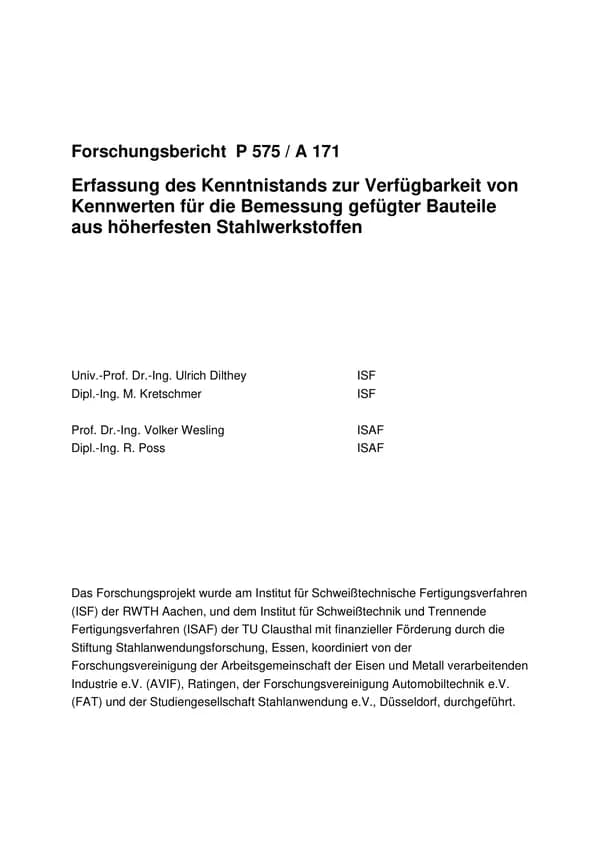
Growing efforts to increase the environmentally friendly performance of technical products and processes require the development and implementation of innovative energy- and resource-saving design concepts. This implies, on the one hand, the qualification and integration of new types of processing and recycling-friendly material systems with application-specific optimised technological properties and, on the other hand, the availability of material-compatible production technologies. The most important goals of the automotive industry include reducing fuel consumption by saving weight, increasing passive safety by optimising the design and use of materials, reducing production costs while simultaneously increasing quality and providing adequate corrosion protection.
Steel, aluminium, magnesium and plastic are competing materials. Despite the increased use of light metals in vehicle construction, steel remains the most important material. Its costs, its mechanical properties, its recyclability and its potential for innovation speak in favour of this material, also in the future. The demand to reduce energy consumption in the production and, above all, operation of vehicles is reflected in the endeavours of steel and car manufacturers to reduce weight, which is particularly evident in the following trends: - Increased replacement of soft steels with higher-strength, cold-rolled thin sheets in car body construction to reduce weight and increase passive occupant safety, - The use of laser-welded and pinch-welded blanks, so-called tailored blanks, for the stress-optimised use of thin sheets, - Substitution of cast and forged parts with sheet metal components and - the use of surface-finished sheet metal. Industrial development shows that development costs can be reduced in lightweight construction concepts through numerical simulation on the one hand and analytical calculation concepts on the other. In addition, the demands on component properties for different mechanical stresses such as quasi-static, dynamic cyclic, impact and corrosive stresses are constantly increasing. As a result, the reliable prediction of functional load-bearing capacity must be increased for the quality-compliant design of components. The use of high-strength steels is aimed at a lightweight design, combined with an average reduction in material consumption due to the excellent mechanical and technological properties of the existing microstructures. The material properties of high-strength steels are changed in the joining zone and in areas close to the joining zone through the use of adhesive joining processes such as bonding, soldering and welding as well as mechanical joining processes such as self-pierce riveting and clinching. The strength of the joint is therefore an essential property for the designer, depending on the selected manufacturing process, in order to be able to estimate the component behaviour using computational methods and simulation.
Payment by card (Stripe) or invoice (DE, AT, CH). Download link by email: automatically after ordering by card, after order approval for invoice (valid for 30 days). Terms
Machine-translated title and description. The document itself is in German.
Digital download
Other parts and editions as well as neighbouring documents of the same series.

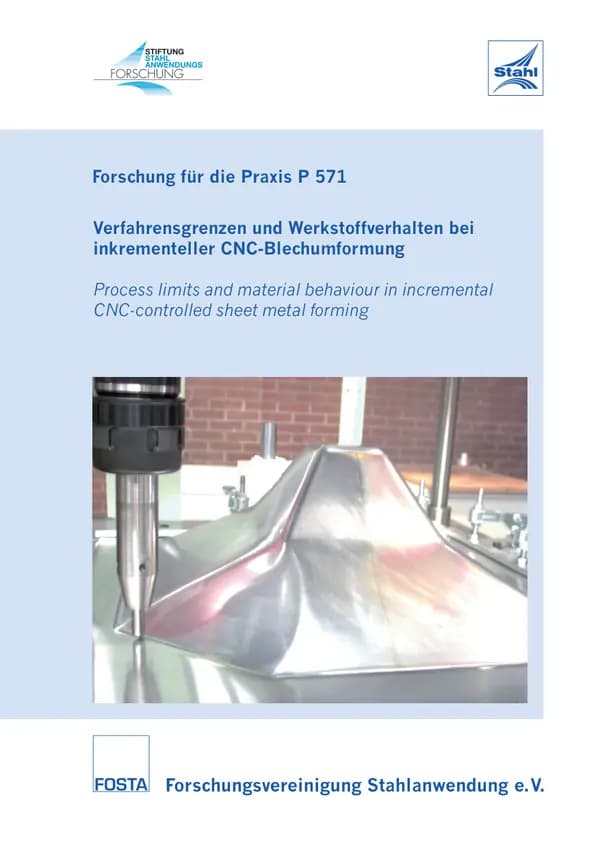
P 571 - Process limits and material behaviour in incremental CNC sheet metal forming Moulded parts made of sheet steel are widely used and are manufactured very economically in large series using conventional sheet metal forming processes. For the production of small series, individual parts or large components made of sheet steel, a suitable alternative process has so far been lacking that can be used to produce complex formed sheet metal components from a CAD model in a short time and without significant tooling costs. This gap can be closed by the innovative incremental sheet metal forming process investigated in the project. In this process, the sheet metal is firmly clamped in a universal sheet metal holder. The component geometry is produced by incremental partial forming using a CNC-controlled universal tool head. The known process variants differ in terms of the use of counter tools and the strategies used to generate the tool path. As part of the project, it was shown that complex component geometries with multi-axis curvatures, small radii, filigree secondary mould elements or inclined frames can be produced in this way. Very good surface qualities and, if necessary, high localised hardening can be achieved. Together with partners from the steel manufacturing and steel processing industries as well as the mechanical engineering, automotive and aerospace industries, the project initially used various principle components to determine the process limits of the forming technology chosen as a starting point. In addition, application-related sample components were produced from the partners' product range and the technology itself was further developed. Initially, there were limitations for components with steep frames, where excessive thinning and lower geometric accuracy were identified. Significant improvements were achieved in this respect with the process modifications developed in the project. For example, the sample component "reinforcing strut for B-pillar" could be produced with a wall thickness distribution and geometric accuracy similar to the deep-drawing process, despite the vertical frames in some areas. However, the determination of these modified forming strategies currently still requires a considerable amount of experimental optimisation due to a lack of experience. The process appears to be economically viable for the production of components with slightly to moderately inclined frames in quantities of "one" to "several thousand". With the further developments that have been started, the scope for design will expand considerably and also enable geometries that cannot be realised with standard processes. Furthermore, within certain limits, targeted adjustment of the sheet thickness distribution appears conceivable, opening up new possibilities for lightweight construction. Further areas of application can be found in mechanical engineering, but also in architecture and design (e.g. street furniture). Authors: G. Hirt, J. Ames, M. Bambach, I. Chouvalova, S. Junk Publication: 2015
available anytime
€30.00
excl. VAT

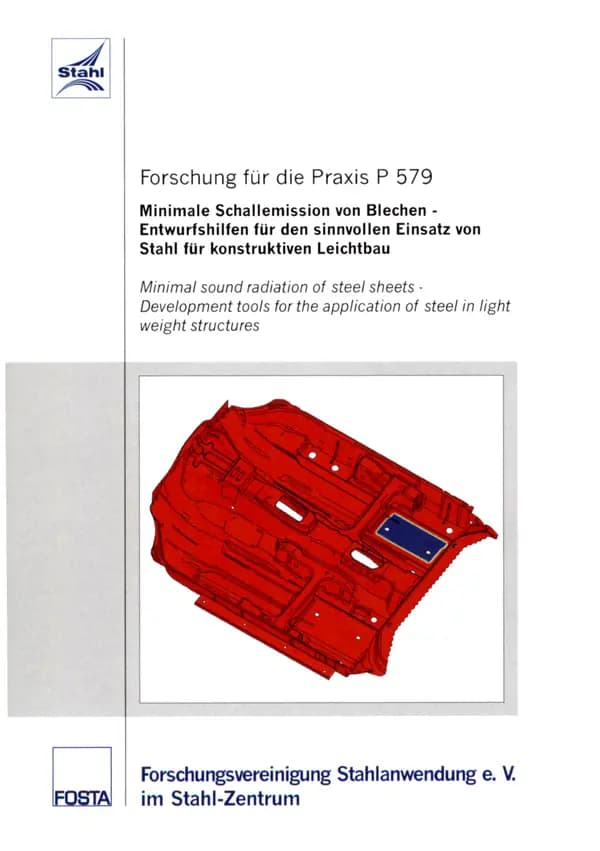
P 579 - Minimising acoustic emissions from sheet metal - Design aids for the sensible use of steel in lightweight construction Many everyday products are made of thin steel sheets, which have a decisive influence on their vibration behaviour and acoustic properties. In order to minimise the overall mass of the product, beads are introduced into these sheets so that the stiffness of the thin-walled structures is influenced locally. Such interventions are a passive way of minimising noise and can be planned at an early design stage. The shape and location of such beads on the sheet metal are left to the designer's experience. Although this type of modification has been widely used in many areas for years, there is a lack of basic criteria or guidelines for effective implementation in the literature. In this project, possibilities were investigated to implement such geometry optimisations numerically efficiently, so that the executing designer can be supported. Simulation methods of the vibrating structure and the acoustic field were considered. Taking into account the computing time required, the focus was particularly on simplified modelling for coupling the structural-dynamic and acoustic subsystems. So that the optimisation itself could be carried out, the initial models were represented parametrically and the sensitivities of the target variables to these parameters were determined. A concept was developed and implemented for this purpose. This work was carried out in co-operation with Audi AG, Ingolstadt. This made it possible to address realistic problems in the vehicle industry and, in particular, the effects of the car body on vehicle interior noise. Authors: H. J. Hardtke, S. Marburg, D. Fritze Publication: 2008
available anytime
€20.00
excl. VAT

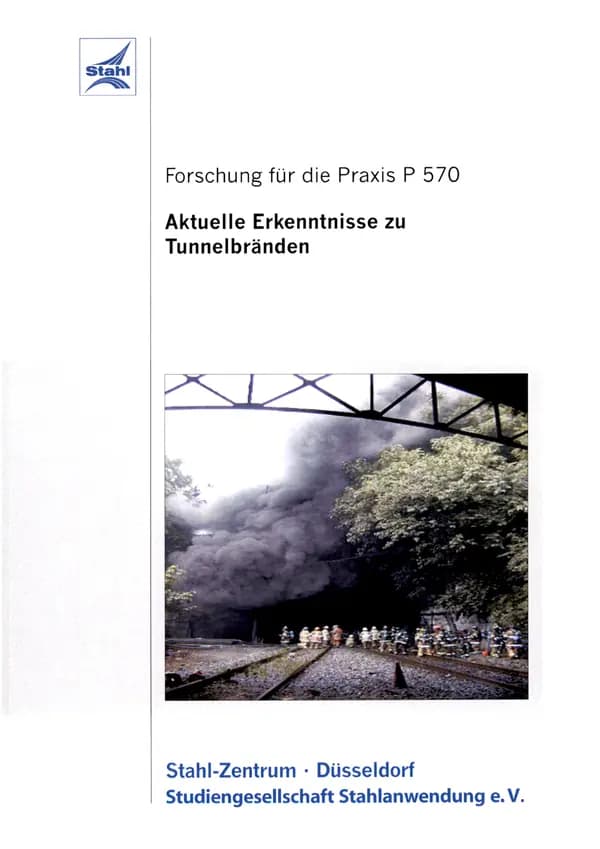
P 570 - Behaviour of rail vehicles of steel or aluminium construction in tunnel fires Recent fire incidents in European tunnels have once again raised the question of preventive fire protection measures. The focus here is on personal protection and, if necessary, the longest possible time span for rescue measures or the avoidance of fires and thus the damage and consequential damage costs. Two papers present important findings and facts for the fire protection behaviour of rail vehicles. With regard to the questions concerning the selection of the metallic materials steel and aluminium, the research work carried out as part of a EUREKA project funded by the BMBF (overall report July 1998) and supplementary documents were analysed. In a second elaboration, the building regulations and the effect of fire protection criteria on the choice of materials in railway vehicle construction were analysed. For passenger coaches, design values of 20 to 25 MW are assumed for steel vehicles and 30 MW for aluminium vehicles with regard to energy release in the event of fire. Fire tests show that, in contrast to steel vehicles, in the case of aluminium vehicles the effect of flashover causes the melting of structural areas and at the tunnel roof peak temperatures of around 1050 °C, i.e. 400 °C more than with steel construction, have occurred. Wagons made of extruded aluminium show greater resistance to the effects of fire over time compared to differential construction. When an aluminium rail vehicle catches fire in the track tunnel, the fire tends to spread faster than with steel construction. This results in higher temperatures and a faster release of smoke gas. An analysis of the fire protection building regulations and the objective decision criteria for the choice of structural material and construction method reveals few advantages for steel from the point of view of preventive fire protection. As a selection criterion, these do not carry any weight compared to the operator's fleet policy or in favour of the continuity of the use of manufacturing experience and investment in aluminium construction. STUDIENGESELLSCHAFT STAHLANWENDUNG e.V. Publication: 2001 Authors: Prof. Dr.-Ing. A. Haack, Dr.-Ing. W. Meyeroltmanns, Dr.-Ing. H.-P. Cabos
available anytime
€20.00
excl. VAT

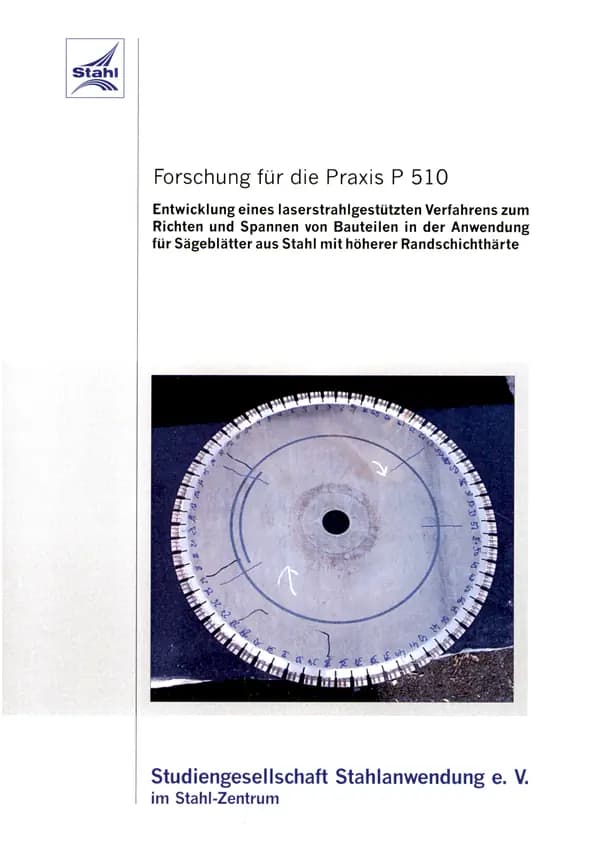
P 510 - Development of a laser-assisted process for straightening and clamping components in the application for saw blades made of steel with higher surface hardness Circular saw blades consist of the cutting tool body (blade) and the cutting parts attached to it. Tool steels with a constant hardness of 38 to 46 HRC across the cross-section are used for the blade body. The cutting parts for wood and wood-based material processing are mainly carbide teeth attached to them by brazing, and diamond segments for stone processing by brazing and laser welding. When using saw blades, there is a requirement for a narrow kerf and stable blade behaviour. These requirements are met by using stiffer saw blades and by adjusting the dynamic behaviour of the cutting parts. A reduction in the kerf width and stable blade behaviour due to stiffer blades was achieved by using case-hardened pre-material. The steel grades 13CrMo4-5 (1.3566) and 14NiCr14 (1.5752) with a low carbon content were used and case-hardened. Due to the high surface hardness of up to 60 HRC, the mechanical forming required for clamping and straightening is only possible with increased effort, so that the straightening and clamping process must be carried out by other methods, e.g. by localised short-term heating. With the laser straightening process, surface crack-free forming could be achieved in preliminary tests. This demonstrated the general suitability of the laser levelling process. The risks of the process lie in the fact that the complex heat treatment process of case hardening the sheet metal must be adapted to the requirement profile of the circular saw blades without leading to excessive distortion of the components. The diverse parameter variations of case hardening must be taken into account. This increases the overall component strength (fatigue bending fatigue strength). This reduces the bending vibrations that occur during use, particularly at high speeds. The result is a reduction in noise emissions and an improvement in cutting quality. Due to the higher component strength, the blade thickness can be reduced. The project objectives of developing a process for manufacturing sawing tools from sheet metal with a higher surface layer hardness and a method for straightening and clamping using a laser beam to reduce the kerf width, increase the cutting surface quality and minimise the environmental impact were achieved. The new tools were trialled during the work in industry, and the aim is to implement them in daily production in the medium term. STUDIENGESELLSCHAFT STAHLANWENDUNG e.V. Publication: 2003 Authors: Dr.-Ing. G. C. Stehr, Dipl.-Ing. U. V. Münz
available anytime
€20.00
excl. VAT
Payment by card (Stripe) or invoice (DE, AT, CH). Download link by email: automatically after ordering by card, after order approval for invoice (valid for 30 days). Terms